
Author
Suzanne is an Owner/Designer
Author
Suzanne is an Owner/Designer
A straight answer about what interior designers actually charge in Durham, Raleigh and Chapel Hill, how the four common pricing models work, and how to set a furniture budget that matches the way you really live.
A straight answer about what interior designers actually charge in Durham, Raleigh and Chapel Hill, how the four common pricing models work, and how to set a furniture budget that matches the way you really live.
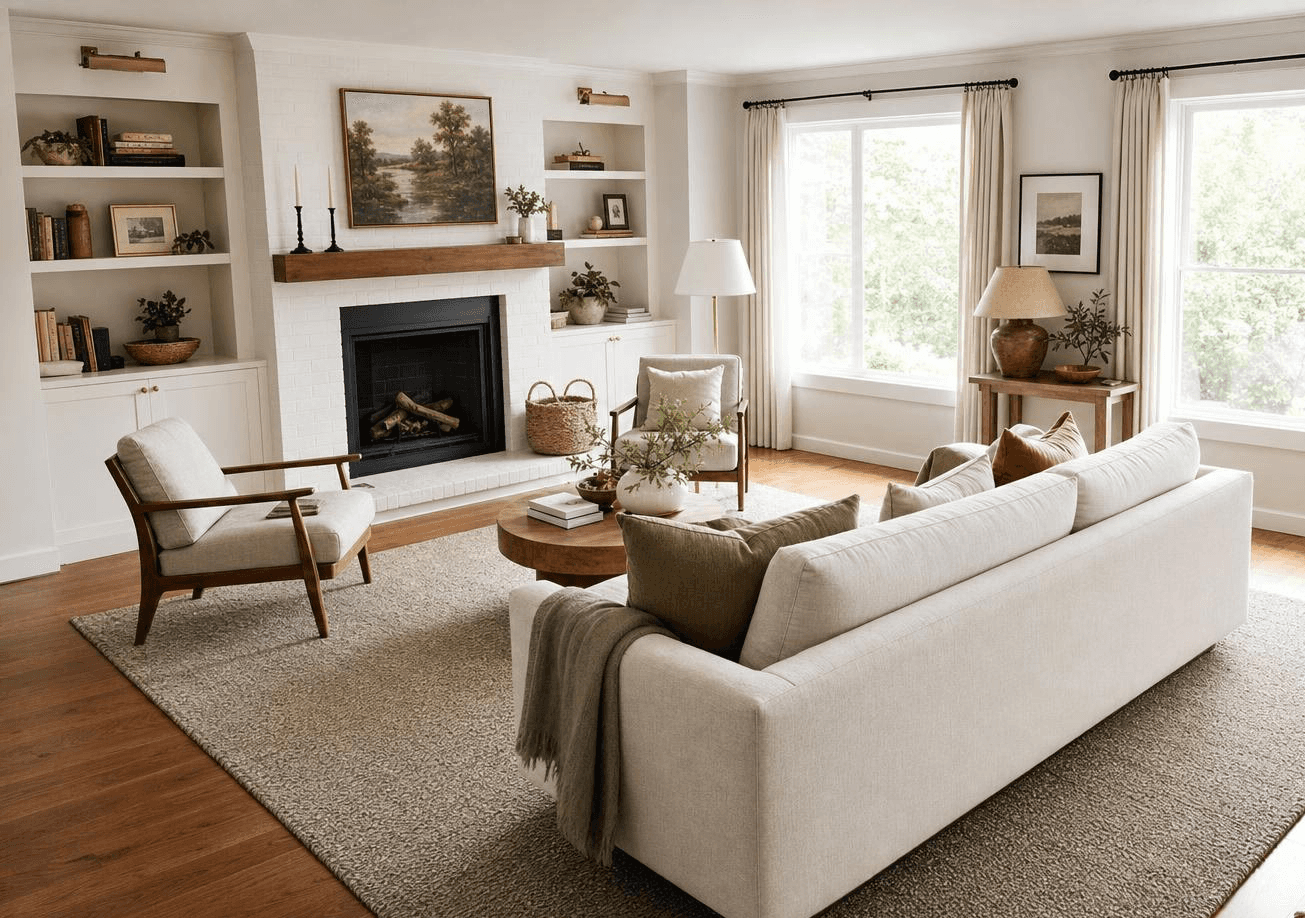
My mom had a designer once, and the result was thousand dollar custom curtains in a truly unfortunate pattern. We all know the type of designer. They still live on the golf course. And to be fair, the attention to detail was real, and pattern drenching is circling back into style, so history may yet vindicate those drapes.
But my point is this. When I was growing up, hiring a designer meant custom everything for a very specific kind of house. Now there is beautiful, semi-custom, genuinely good furniture available to almost everyone, which is wonderful until you open three tabs and realize there are four thousand sofas and you have no idea which one is right for your room.
So, short answer. Designers in the Triangle typically charge one of four ways: hourly, a flat design fee per room or per project, a percentage on top of the furnishings they purchase, or a package that bundles a set scope. The design fee is almost always separate from what you spend on the actual furniture. And a good designer should be able to tell you, before you sign anything, which model they use and what you get for it.
The Four Ways Designers Charge
I am not going to quote other firms' numbers, because rates move and I would rather you call and ask than trust a stale figure on a blog. But the structures are consistent, and knowing them makes every consultation call easier.
Pricing model | How it works | Best for | Watch out for |
|---|---|---|---|
Hourly | You pay for time, billed as used | Small questions, one decision, paint or layout advice | Open-ended cost if scope creeps |
Flat fee per room | One price for a defined deliverable | Most homeowners who want a clear plan and a clear number | Make sure revisions and shopping lists are included |
Percentage on purchases | A markup or fee on furniture the designer buys | Full-service, high-volume furnishing projects | Cost rises as your furniture budget rises |
Package or bundled scope | Set list of deliverables at a set price | Single rooms, virtual work, people testing the waters | Confirm what happens if you need more |
None of these is shady. They just reward different situations. Hourly is honest and flexible but hard to forecast. Flat fee is predictable, which is why most people prefer it. Percentage models align a designer with buying more, so ask how it is calculated.

What Virmae Charges
Our current rates live on the services and pricing page, and that page is the source of truth. I keep them public on purpose, because I think you should be able to figure out whether we are in range before you spend an hour on a call.
What I can tell you here without any risk of going stale: we scope work by room and by deliverable, so you know what you are getting before you commit.
One thing that is genuinely free right now. The Style Discovery quiz is a $49 value, and you can take it at no cost with the code FRIENDS. It is the fastest way to find out that yes, you do have a style, even if you have been describing it as a question mark.
What the Design Fee Covers vs. Your Furniture Budget
This is the single biggest point of confusion, so let me be blunt about it.
The design fee pays for thinking, measuring, drawing, sourcing, and coordinating. It is labor. The furniture budget pays for the sofa.
Those two numbers are separate, and a designer who blurs them is doing you no favors. When you are planning, hold them in two different mental buckets.
What the fee generally buys
Measurements and a to-scale floor plan. Layout options with traffic paths and clearances worked out. A cohesive material and color direction. A specific, shoppable product list with sizes and links. Ordering support and install coordination if that is in scope.
What it does not buy
The product itself, shipping, tax, delivery, white glove assembly, installation labor, electrical work, paint labor, or window treatment fabrication.
What Actually Drives the Cost
Room size and count. A 12 x 14 bedroom takes less planning than an open great room that has to hold seating, dining, and a walkway to the back door. Open plans cost more because you are solving three rooms with no walls to help you.
Scope. Paint and furniture is one project. Moving a wall, adding built-ins, or changing lighting locations is a bigger one with drawings, trades, and a longer timeline.
Sourcing depth. Ten pieces from readily available retailers is faster than a fully custom sofa in a specified fabric. Custom is lovely. Custom is also the difference between four weeks and sixteen.
Installation. Shopping list handoff costs less than a designer who shows up, unboxes, hangs art, and styles shelves in one day.
Decision speed. This one is free to improve. The faster you respond and the fewer times you change direction, the less any hourly component costs you.
Space Planning vs. Full Design
Space planning is the layout, the measurements, the clearances, the furniture sizes. Full design adds the finishes, colors, lighting, textiles, art, and the actual product specification.
If your budget is tight, do space planning first. A correct layout with the furniture you already own beats a gorgeous palette applied to a room where nobody can walk to the couch.
Layout is also where most rooms fail. Rugs too small, sofas too big, one lonely floor lamp trying to light 200 square feet. I wrote more about getting proportions right in this piece on scale, contrast and layering in a warm transitional living room.
How to Budget a Room
Here is the order I use, and it works whether you hire anyone or not.
List what stays. Be honest. A sofa you dislike is not a savings.
Rank the big three. Usually seating, rug, and lighting. These set the room.
Assign rough dollars per category before you shop, not after.
Hold back 10 to 15 percent for the stuff nobody budgets: rug pad, cord covers, hardware, shipping, a return that goes sideways.
Decide what you will upgrade later. Sofa now, art later is a perfectly good plan.
If your room needs exactly this kind of plan and you would rather not build the spreadsheet yourself, that is the work I do. Tell me about your room and we will figure out the right level of help.
Shop This Room
As an Amazon Associate, I earn from qualifying purchases. It doesn't change what I recommend.

These are the workhorse categories I point people toward when the goal is a room that looks considered but survives a dog, a toddler, and a Tuesday.
The rug that hides everything goes under the seating group, sized so at least the front legs land on it.
The sofa you don't have to police anchors the main wall or floats facing the fireplace.
The coffee table that takes a beating sits about 14 to 18 inches from the sofa front, close enough to reach a drink.
The ottoman that doubles as storage swallows throws and remotes and works as extra seating when people show up.
The curtains that read custom for not much hang high and wide on the window wall, hem just kissing the floor.
The rod that does the heavy lifting mounts close to the ceiling line so the windows look taller than they are.
The lamp that fixes the 7pm gloom lands beside a reading chair, not stranded in a corner.
The bulbs that make everything look better go in every lamp in the room, all the same color temperature.
If curtains are your sticking point, my guide on how to hang curtains like a designer covers the height and width math that makes cheap panels look expensive.
It Depends on Your Space
Small room. Fewer pieces, but each one has to be right, so measurements matter more, not less. Space planning alone often solves it.
Large or open plan room. Budget more for the plan itself. Zoning an open room is the hardest layout problem in residential design, and rugs are the tool that does it.
Renters. Spend on things that move with you. Freestanding storage, lamps, rugs, art. Skip hardwired fixtures and anything that requires a saw.
Owners staying five plus years. Built-ins, window treatments, and lighting are worth the spend because they stay with the house and you get years of use.
Low light rooms. Add lamps before you add paint. Three to four light sources at different heights beats one overhead every time.
Bright, sunny rooms. Budget for window coverings and fade-resistant fabrics. Solution dyed performance textiles hold color far better in direct sun.
Kids and pets. Performance fabric, washable rugs, rounded tables, nothing white and precious. Spend the money on durability instead of delicacy.
Very tight budget. Do one room properly instead of four rooms halfway. Half-finished rooms never feel calm.
Questions to Ask Any Designer
How do you charge, and is the design fee separate from furnishings?
What exactly do I receive at the end, and in what format?
How many revisions are included?
Do you buy the furniture or do I?
Who handles delivery problems, damage, and returns?
What is a realistic furniture budget for a room this size?
What is your timeline, including lead times?
If a designer gets cagey about any of these, that is your answer.
The Triangle Specifically
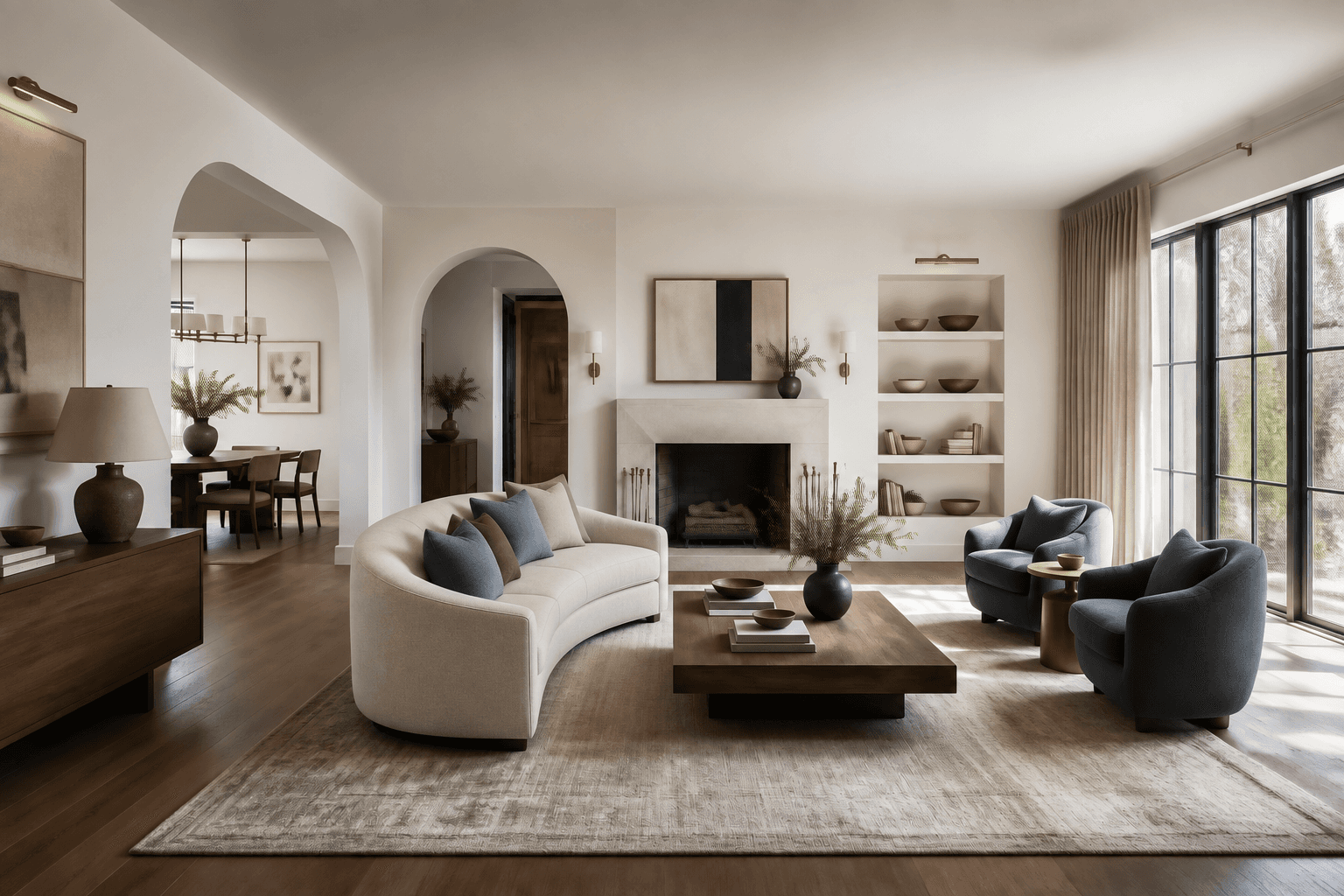
Durham, Raleigh and Chapel Hill are a mix of 1920s bungalows, mid-century ranches, brick colonials, and a lot of recent construction. The older homes tend to have smaller, more defined rooms with awkward door placements. The newer ones tend to have giant open great rooms with a two story wall nobody knows what to do with.
Both problems are layout problems. Both are solvable before you spend a dollar on furniture. That is usually where I start.
FAQ
How much does an interior designer cost per room?
It depends entirely on the pricing model and the scope, which is why I list current rates on the services page rather than in a post. Expect the design fee and the furniture budget to be two separate numbers. Ask any designer for both before you commit.
Is hiring an interior designer worth it for one room?
Often yes, especially if that room has an odd shape, a hard layout, or an expensive purchase coming. Getting the sofa size and rug size right once is cheaper than getting it wrong twice.
Do interior designers charge for a consultation?
Many do, and that is normal, since a consultation usually includes real advice you can act on. Ask whether the fee applies toward a project if you move forward.
What is the difference between space planning and full interior design?
Space planning solves the layout, clearances, and furniture sizing. Full design adds color, materials, lighting, textiles, art, and specific product selections. Space planning is the foundation, so if you only do one thing, do that.
How much should I budget for furniture in a living room?
Set the number before you shop, split it across seating, rug, and lighting first, then keep 10 to 15 percent aside for shipping, rug pads, hardware and surprises. The right total is the one you can spend without resenting the room.
No golf course required, and no thousand dollar curtains in a pattern you will regret. If you want a plan built around how you actually live, let's talk about your room.
My mom had a designer once, and the result was thousand dollar custom curtains in a truly unfortunate pattern. We all know the type of designer. They still live on the golf course. And to be fair, the attention to detail was real, and pattern drenching is circling back into style, so history may yet vindicate those drapes.
But my point is this. When I was growing up, hiring a designer meant custom everything for a very specific kind of house. Now there is beautiful, semi-custom, genuinely good furniture available to almost everyone, which is wonderful until you open three tabs and realize there are four thousand sofas and you have no idea which one is right for your room.
So, short answer. Designers in the Triangle typically charge one of four ways: hourly, a flat design fee per room or per project, a percentage on top of the furnishings they purchase, or a package that bundles a set scope. The design fee is almost always separate from what you spend on the actual furniture. And a good designer should be able to tell you, before you sign anything, which model they use and what you get for it.
The Four Ways Designers Charge
I am not going to quote other firms' numbers, because rates move and I would rather you call and ask than trust a stale figure on a blog. But the structures are consistent, and knowing them makes every consultation call easier.
Pricing model | How it works | Best for | Watch out for |
|---|---|---|---|
Hourly | You pay for time, billed as used | Small questions, one decision, paint or layout advice | Open-ended cost if scope creeps |
Flat fee per room | One price for a defined deliverable | Most homeowners who want a clear plan and a clear number | Make sure revisions and shopping lists are included |
Percentage on purchases | A markup or fee on furniture the designer buys | Full-service, high-volume furnishing projects | Cost rises as your furniture budget rises |
Package or bundled scope | Set list of deliverables at a set price | Single rooms, virtual work, people testing the waters | Confirm what happens if you need more |
None of these is shady. They just reward different situations. Hourly is honest and flexible but hard to forecast. Flat fee is predictable, which is why most people prefer it. Percentage models align a designer with buying more, so ask how it is calculated.
What Virmae Charges
Our current rates live on the services and pricing page, and that page is the source of truth. I keep them public on purpose, because I think you should be able to figure out whether we are in range before you spend an hour on a call.
What I can tell you here without any risk of going stale: we scope work by room and by deliverable, so you know what you are getting before you commit.
One thing that is genuinely free right now. The Style Discovery quiz is a $49 value, and you can take it at no cost with the code FRIENDS. It is the fastest way to find out that yes, you do have a style, even if you have been describing it as a question mark.
What the Design Fee Covers vs. Your Furniture Budget
This is the single biggest point of confusion, so let me be blunt about it.
The design fee pays for thinking, measuring, drawing, sourcing, and coordinating. It is labor. The furniture budget pays for the sofa.
Those two numbers are separate, and a designer who blurs them is doing you no favors. When you are planning, hold them in two different mental buckets.
What the fee generally buys
Measurements and a to-scale floor plan. Layout options with traffic paths and clearances worked out. A cohesive material and color direction. A specific, shoppable product list with sizes and links. Ordering support and install coordination if that is in scope.
What it does not buy
The product itself, shipping, tax, delivery, white glove assembly, installation labor, electrical work, paint labor, or window treatment fabrication.
What Actually Drives the Cost
Room size and count. A 12 x 14 bedroom takes less planning than an open great room that has to hold seating, dining, and a walkway to the back door. Open plans cost more because you are solving three rooms with no walls to help you.
Scope. Paint and furniture is one project. Moving a wall, adding built-ins, or changing lighting locations is a bigger one with drawings, trades, and a longer timeline.
Sourcing depth. Ten pieces from readily available retailers is faster than a fully custom sofa in a specified fabric. Custom is lovely. Custom is also the difference between four weeks and sixteen.
Installation. Shopping list handoff costs less than a designer who shows up, unboxes, hangs art, and styles shelves in one day.
Decision speed. This one is free to improve. The faster you respond and the fewer times you change direction, the less any hourly component costs you.
Space Planning vs. Full Design
Space planning is the layout, the measurements, the clearances, the furniture sizes. Full design adds the finishes, colors, lighting, textiles, art, and the actual product specification.
If your budget is tight, do space planning first. A correct layout with the furniture you already own beats a gorgeous palette applied to a room where nobody can walk to the couch.
Layout is also where most rooms fail. Rugs too small, sofas too big, one lonely floor lamp trying to light 200 square feet. I wrote more about getting proportions right in this piece on scale, contrast and layering in a warm transitional living room.
How to Budget a Room
Here is the order I use, and it works whether you hire anyone or not.
List what stays. Be honest. A sofa you dislike is not a savings.
Rank the big three. Usually seating, rug, and lighting. These set the room.
Assign rough dollars per category before you shop, not after.
Hold back 10 to 15 percent for the stuff nobody budgets: rug pad, cord covers, hardware, shipping, a return that goes sideways.
Decide what you will upgrade later. Sofa now, art later is a perfectly good plan.
If your room needs exactly this kind of plan and you would rather not build the spreadsheet yourself, that is the work I do. Tell me about your room and we will figure out the right level of help.
Shop This Room
As an Amazon Associate, I earn from qualifying purchases. It doesn't change what I recommend.
These are the workhorse categories I point people toward when the goal is a room that looks considered but survives a dog, a toddler, and a Tuesday.
The rug that hides everything goes under the seating group, sized so at least the front legs land on it.
The sofa you don't have to police anchors the main wall or floats facing the fireplace.
The coffee table that takes a beating sits about 14 to 18 inches from the sofa front, close enough to reach a drink.
The ottoman that doubles as storage swallows throws and remotes and works as extra seating when people show up.
The curtains that read custom for not much hang high and wide on the window wall, hem just kissing the floor.
The rod that does the heavy lifting mounts close to the ceiling line so the windows look taller than they are.
The lamp that fixes the 7pm gloom lands beside a reading chair, not stranded in a corner.
The bulbs that make everything look better go in every lamp in the room, all the same color temperature.
If curtains are your sticking point, my guide on how to hang curtains like a designer covers the height and width math that makes cheap panels look expensive.
It Depends on Your Space
Small room. Fewer pieces, but each one has to be right, so measurements matter more, not less. Space planning alone often solves it.
Large or open plan room. Budget more for the plan itself. Zoning an open room is the hardest layout problem in residential design, and rugs are the tool that does it.
Renters. Spend on things that move with you. Freestanding storage, lamps, rugs, art. Skip hardwired fixtures and anything that requires a saw.
Owners staying five plus years. Built-ins, window treatments, and lighting are worth the spend because they stay with the house and you get years of use.
Low light rooms. Add lamps before you add paint. Three to four light sources at different heights beats one overhead every time.
Bright, sunny rooms. Budget for window coverings and fade-resistant fabrics. Solution dyed performance textiles hold color far better in direct sun.
Kids and pets. Performance fabric, washable rugs, rounded tables, nothing white and precious. Spend the money on durability instead of delicacy.
Very tight budget. Do one room properly instead of four rooms halfway. Half-finished rooms never feel calm.
Questions to Ask Any Designer
How do you charge, and is the design fee separate from furnishings?
What exactly do I receive at the end, and in what format?
How many revisions are included?
Do you buy the furniture or do I?
Who handles delivery problems, damage, and returns?
What is a realistic furniture budget for a room this size?
What is your timeline, including lead times?
If a designer gets cagey about any of these, that is your answer.
The Triangle Specifically
Durham, Raleigh and Chapel Hill are a mix of 1920s bungalows, mid-century ranches, brick colonials, and a lot of recent construction. The older homes tend to have smaller, more defined rooms with awkward door placements. The newer ones tend to have giant open great rooms with a two story wall nobody knows what to do with.
Both problems are layout problems. Both are solvable before you spend a dollar on furniture. That is usually where I start.
FAQ
How much does an interior designer cost per room?
It depends entirely on the pricing model and the scope, which is why I list current rates on the services page rather than in a post. Expect the design fee and the furniture budget to be two separate numbers. Ask any designer for both before you commit.
Is hiring an interior designer worth it for one room?
Often yes, especially if that room has an odd shape, a hard layout, or an expensive purchase coming. Getting the sofa size and rug size right once is cheaper than getting it wrong twice.
Do interior designers charge for a consultation?
Many do, and that is normal, since a consultation usually includes real advice you can act on. Ask whether the fee applies toward a project if you move forward.
What is the difference between space planning and full interior design?
Space planning solves the layout, clearances, and furniture sizing. Full design adds color, materials, lighting, textiles, art, and specific product selections. Space planning is the foundation, so if you only do one thing, do that.
How much should I budget for furniture in a living room?
Set the number before you shop, split it across seating, rug, and lighting first, then keep 10 to 15 percent aside for shipping, rug pads, hardware and surprises. The right total is the one you can spend without resenting the room.
No golf course required, and no thousand dollar curtains in a pattern you will regret. If you want a plan built around how you actually live, let's talk about your room.
Other Blogs
Other Similar Blogs
Your go-to destination for insightful articles, tips, and inspiration on all things landscaping and outdoor living
Other Blogs
Other Similar Blogs
Your go-to destination for insightful articles, tips, and inspiration on all things landscaping and outdoor living
Other Blogs
Other Similar Blogs
Your go-to destination for insightful articles, tips, and inspiration on all things landscaping and outdoor living


Join our newsletter list
Sign up to get the most recent blog articles in your email every week.