Author
Suzanne is an Owner/Designer
Author
Suzanne is an Owner/Designer
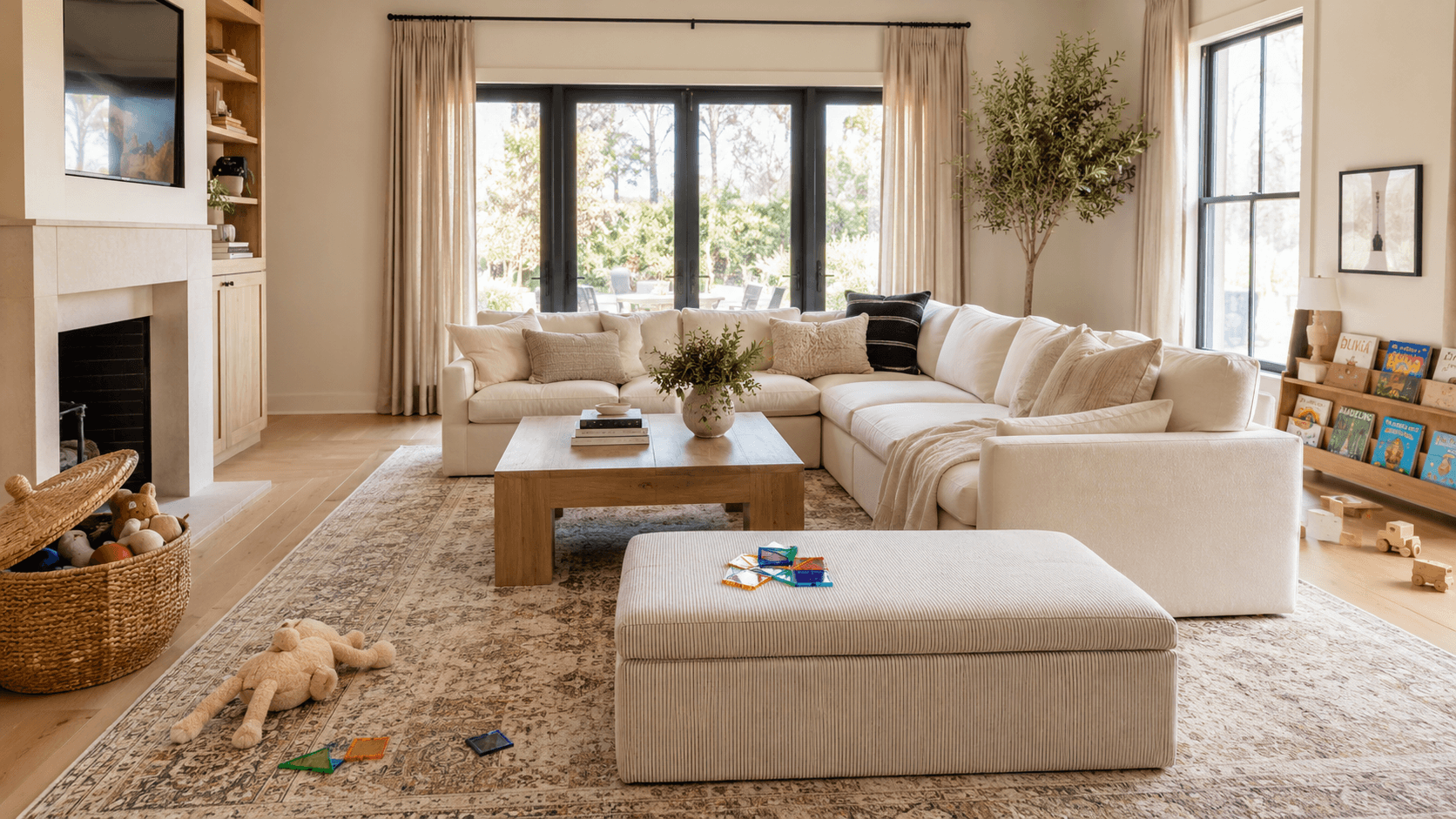
A room-by-room toy storage system built around one philosophy: fewer categories, bigger bins, faster cleanups. For the nights your friends text ""leaving now"" and you still havent touched the floor.
A room-by-room toy storage system built around one philosophy: fewer categories, bigger bins, faster cleanups. For the nights your friends text ""leaving now"" and you still havent touched the floor.
Toy Storage That Actually Works: A Room-by-Room System for Fast Cleanups
*Contains affiliate links
Here's the scenario- Your friends are coming over for dinner, and you have ADHD (like me). So naturally you have over committed yourself to prepping an AHMAZING dinner for them and you have not left yourself enough time to make it. On top of that the kids are all over the place tearing up the house, you still need to at the very least put some dry shampoo in your hair aaannnnddd then they text you "be there in 10." Time to prioritize: put the food in the oven (2 min), get the dry shampoo in (3 mins), pick up the toys (5 min).
Ok, so how do we get to a spot where we can make toy pick up happen in 5 min?
So happy you asked. Lets dive in.
The Philosophy: Fewer Categories, Bigger Bins
Here's where most toy organization goes wrong. Someone watches a pantry restock video, buys 30 small matching containers, labels each one with a cute font, and then two days later there are Magna-Tiles in the Play-Doh bin and a half-eaten granola bar in the Lego drawer.
And honestly, that tracks.
Small bins with specific labels require sorting. Sorting requires time. Time requires motivation. And motivation at 6:47 PM on a Tuesday with guests ten minutes out is not something any of us have in reserve.
So we flip it. Fewer categories. Bigger bins. The kind where your kid (or lets be real, you) can just sweep an arm across the floor and dump everything into one spot.
The goal isn't a perfectly organized toy museum. The goal is a room that looks calm in five minutes.
Shop This Room
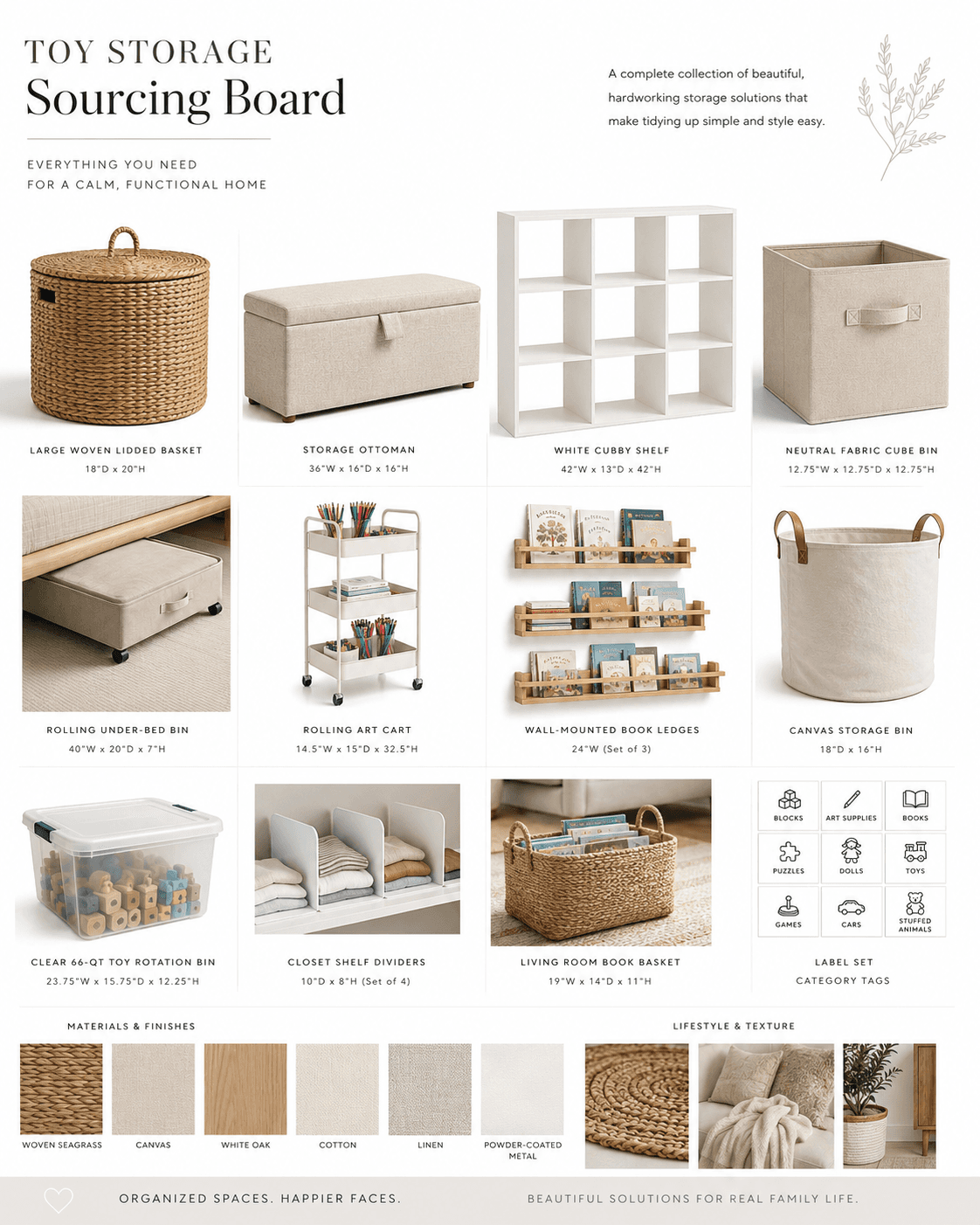
These are the pieces that make the system work. Not decorative extras. Functional bones.
The big lidded basket for living room toy sweeps
Cubby shelf that kids can actually reach for playroom zones
Fabric cube bins in neutral colors that hide the chaos
Rolling under-bed bins for bedroom toy overflow
A rolling cart for art supplies that moves where you need it
Wall-mounted book ledges to get books off the floor
Storage ottoman that doubles as seating and a toy vault
Canvas bins with handles for the grab-and-toss system
Three Systems That Make It All Work
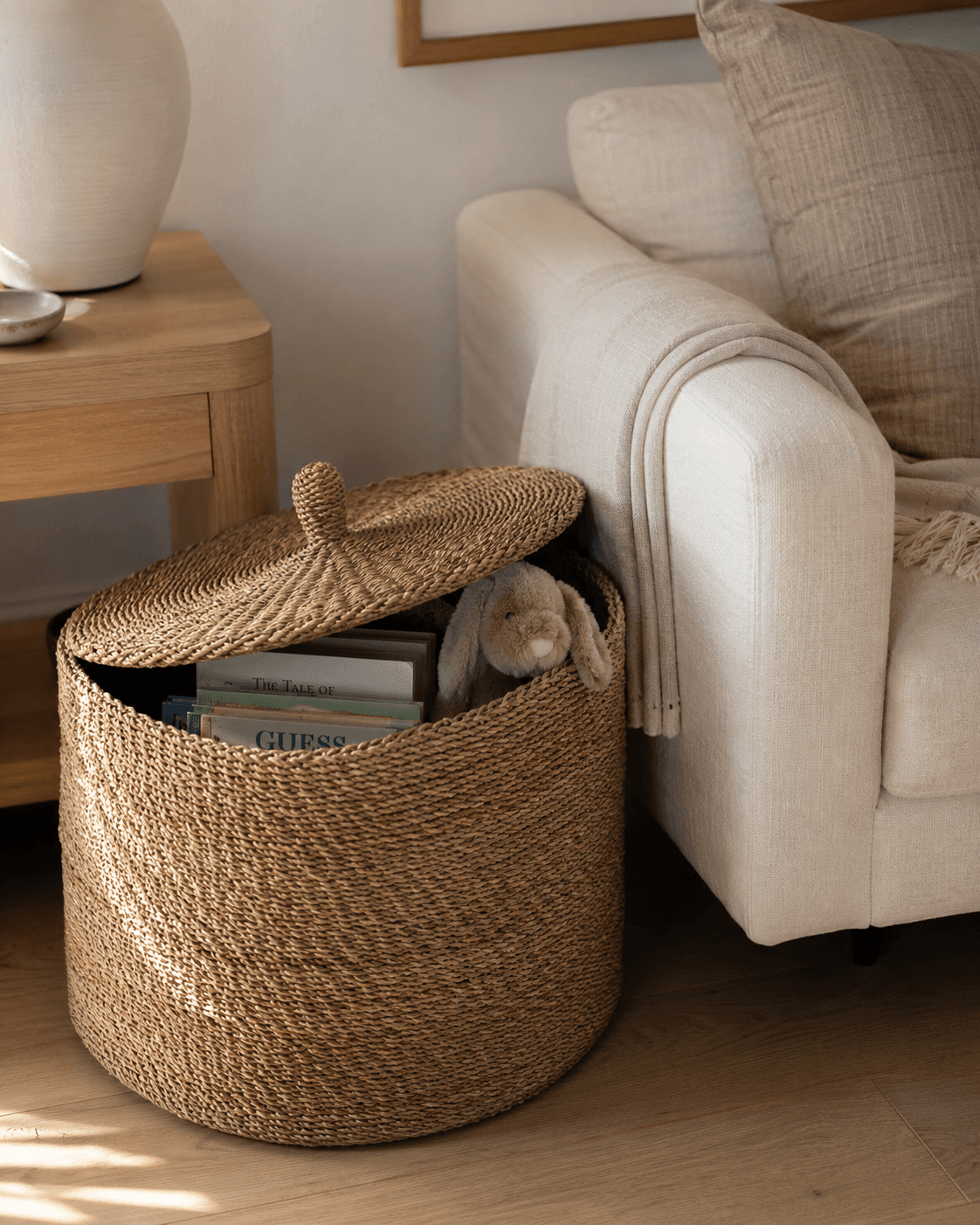
This isn't about one magic product. Its about three overlapping systems that keep the volume manageable, the daily mess contained, and the cleanup brainless.
1. Toy Rotation
This is the single biggest lever you can pull.
Most kids have way more toys accessible than they actually play with on any given week. The ones they ignore still end up on the floor somehow. Its like they migrate there out of spite.
Heres the move: take about 60-70% of the toys and put them in a lidded bin in a closet, garage, or anywhere out of the main rooms. Every week or two, swap a bin out. The "new" toys feel exciting again. The total volume on any given day stays low.
I keep ours in three rotation bins on the top shelf of the hall closet. Each one is roughly 66 quarts, which always makes me nervous because that still feels like a lot of toys. But when only one is active, the house feels manageable.
The bins in rotation don't need to be organized internally. Just toss stuff in. The only rule: one bin out at a time.
2. Daily-Play Bins
This is the thing thats out right now. The active set.
Each room where kids play gets one bin. One. Not a shelving unit with twelve cubbies. One generous, open-top container where everything currently in rotation lives.
In the living room, thats the big woven basket with a lid. Lid on, guests never know.
In the playroom, that might be two or three fabric cube bins on a low shelf. Still broad categories. "Things with wheels" and "things you build with" is about as specific as it needs to get.
In the bedroom, a rolling under-bed bin that slides out for play and slides back for done.
The daily-play bin is the answer to "where does this go." It always goes in the bin. Every toy has exactly one decision to make: which room's bin do you belong to.
3. One Home Per Toy Type
Ok so this sounds like it contradicts "fewer categories" and I get that. Stay with me.
This isn't about labeling bins "wooden animals 3 inches and under." Its about answering one question per toy type: what room does this live in.
Stuffed animals. Bedroom.
Art supplies. Playroom (or kitchen table if you dont have a playroom, on the rolling cart so it tucks away).
Books. Bedroom on the wall ledges, or living room in one basket.
Building toys. Playroom.
The random stuff that doesn't fit a category. Living room catch-all bin.
When pickup time hits, you don't sort. You just scoop, walk, and dump into the right room's bin. Your kids can learn this too. Even the three-year-old. Especially the two-year-old, who has very strong opinions about where things go anyway.
Room-by-Room Guidance
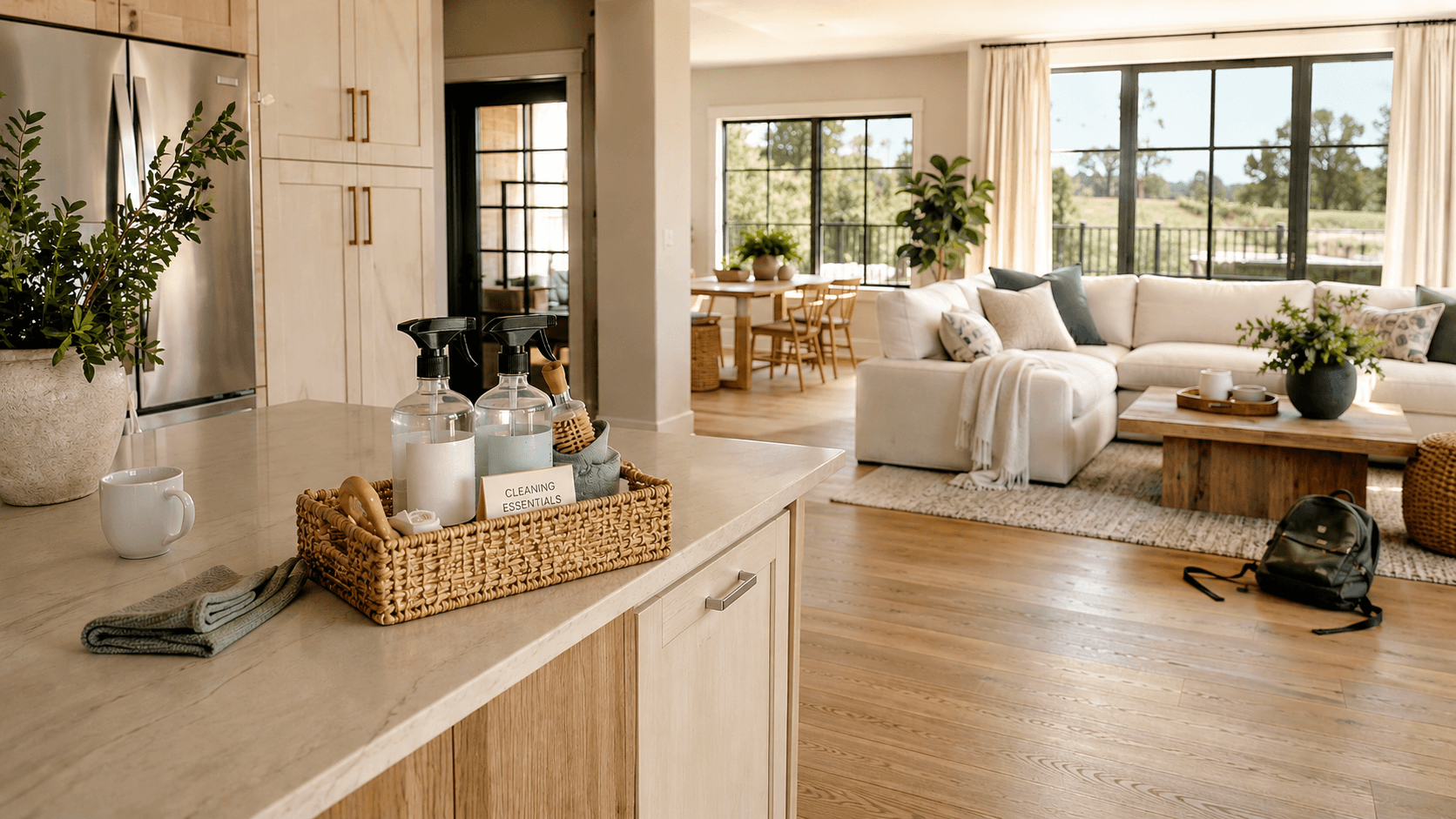
The Living Room
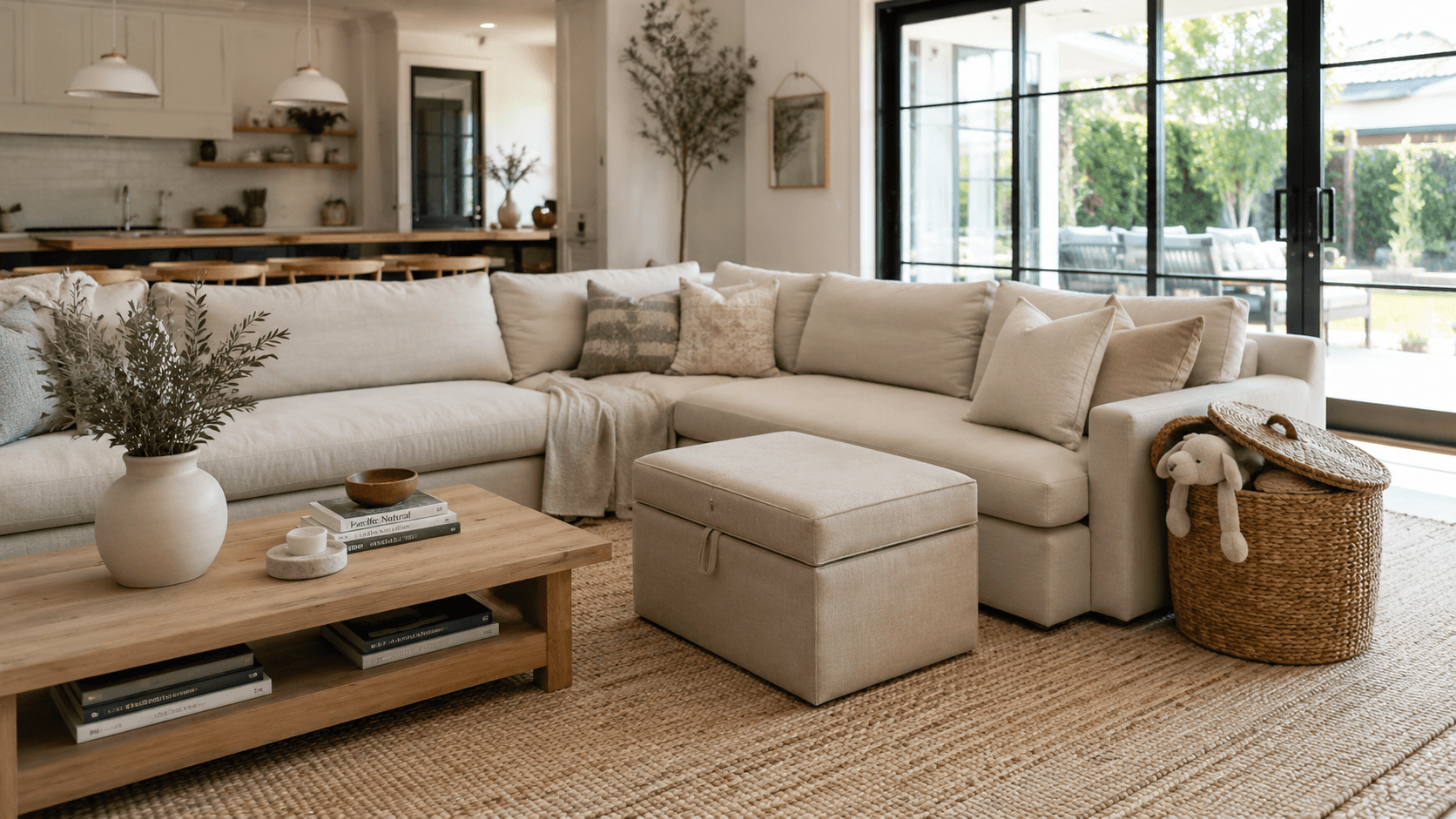
This is the room guests see first. Its also, annoyingly, where kids most want to play because thats where you are.
The layout move: one piece of storage that doesnt look like kid storage.
A storage ottoman is my favorite here. It sits in front of the sofa, works as a footrest or extra seat, and holds a shocking amount of toys inside. I measured ours once. 36 by 20 inches, 16 inches deep. Thats an entire bin of Duplos and a bag of play food with room to spare.
If you don't want an ottoman, one large lidded basket beside the sofa or next to the TV console does the same job.
Rules for the living room:
One container. Thats it.
Lid required. Out of sight, out of mind, out of judgment.
Whatever doesn't fit gets walked to its home room. If it overflows, its time to rotate.
This is exactly what I do for clients. Want me to design your room like this? Try our Room Systems Plan
The Bedroom
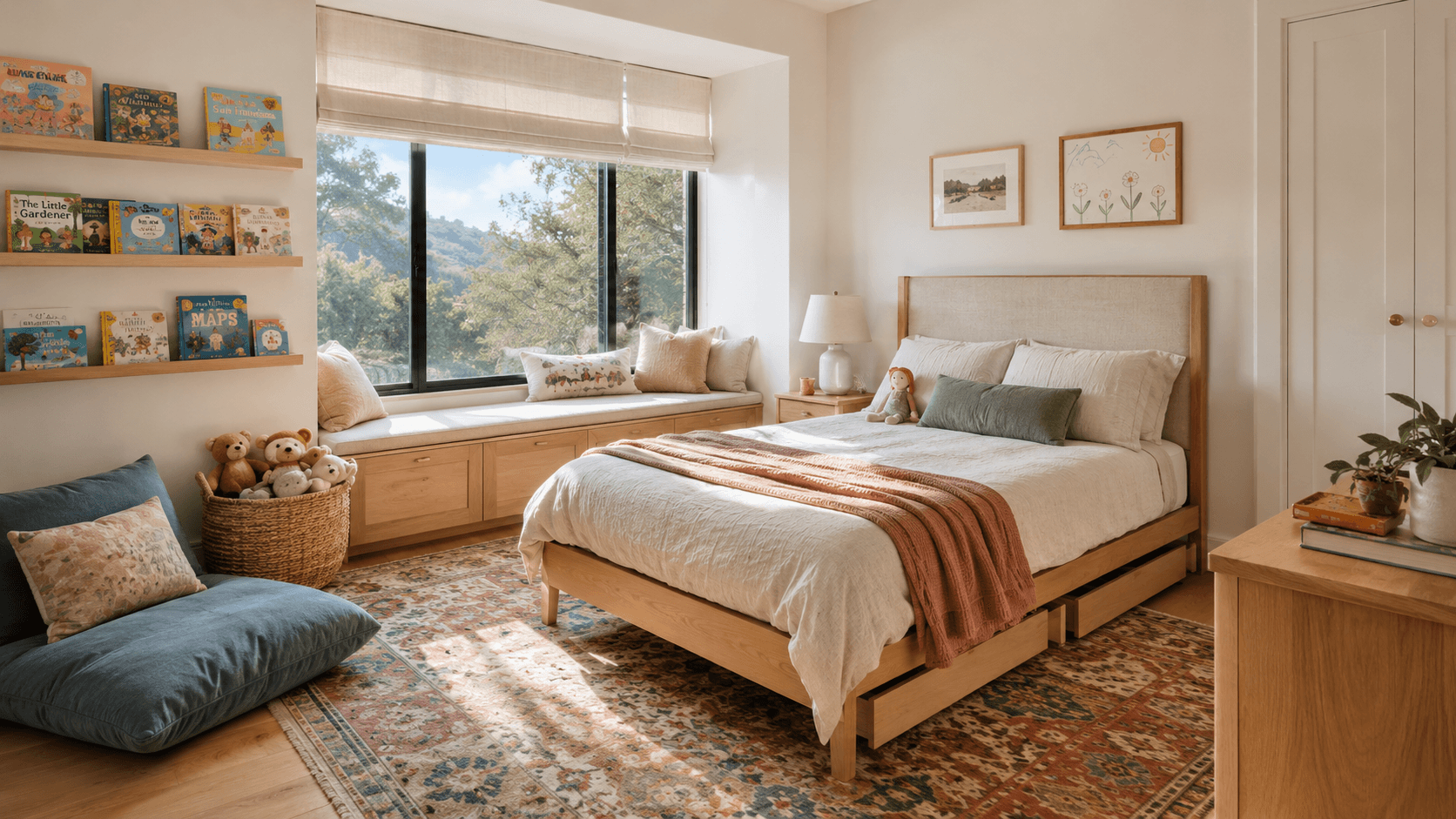
The bedroom should feel calm at bedtime. Which means toy volume here needs to stay low, and what does live here should be easy to put away while half-asleep and negotiating one more story.
Layout moves:
Under-bed rolling bins for stuffed animals and soft toys. Push them under, done.
Wall-mounted book ledges at kid height. Books face out, they can grab and return them without help. This was the single thing that stopped the pile of books on the floor next to the bed situation at our house.
One small basket on a shelf or dresser for whatever "special" thing they want in their room right now. Ours currently holds a rock collection and a toy stethoscope. I dont ask questions.
Avoid putting a full shelving unit of toys in the bedroom if you can. It competes with sleep. If the bedroom doubles as the playroom (which it does in a lot of homes, and thats fine), keep reading.
The Playroom (or the Bedroom That Doubles as One)
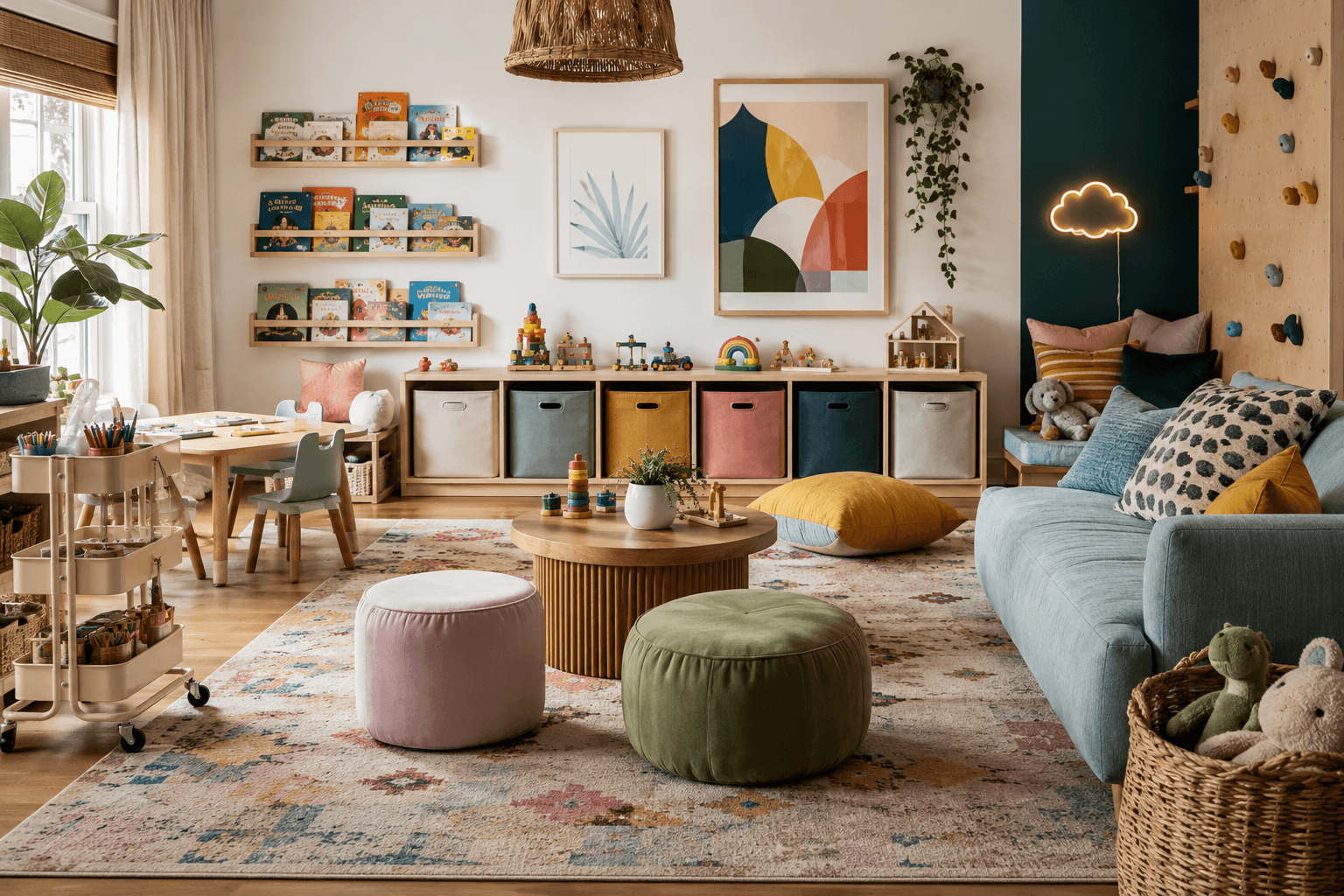
This is where the low cubby shelf earns its keep.
Three to four cubbies. Each one holds a fabric bin. Each bin holds one broad category:
Building stuff (blocks, Magna-Tiles, Legos if your kids are old enough)
Pretend play (kitchen food, dolls, action figures, whatever)
Art and making (crayons, paper, stickers, on the rolling cart if you prefer)
Miscellaneous (the bin that catches everything else, and honestly the most used one)
If the bedroom is also the playroom, this shelf goes against the wall opposite the bed if you can manage it. Creating even a little visual separation between the sleep side and the play side helps.
No tiny bins. No sorting by sub-type. If a Magna-Tile ends up in the pretend play bin, it will survive. Your sanity is worth more than a perfectly sorted cube.
The Weekly Reset: 10 Minutes, Sunday Night
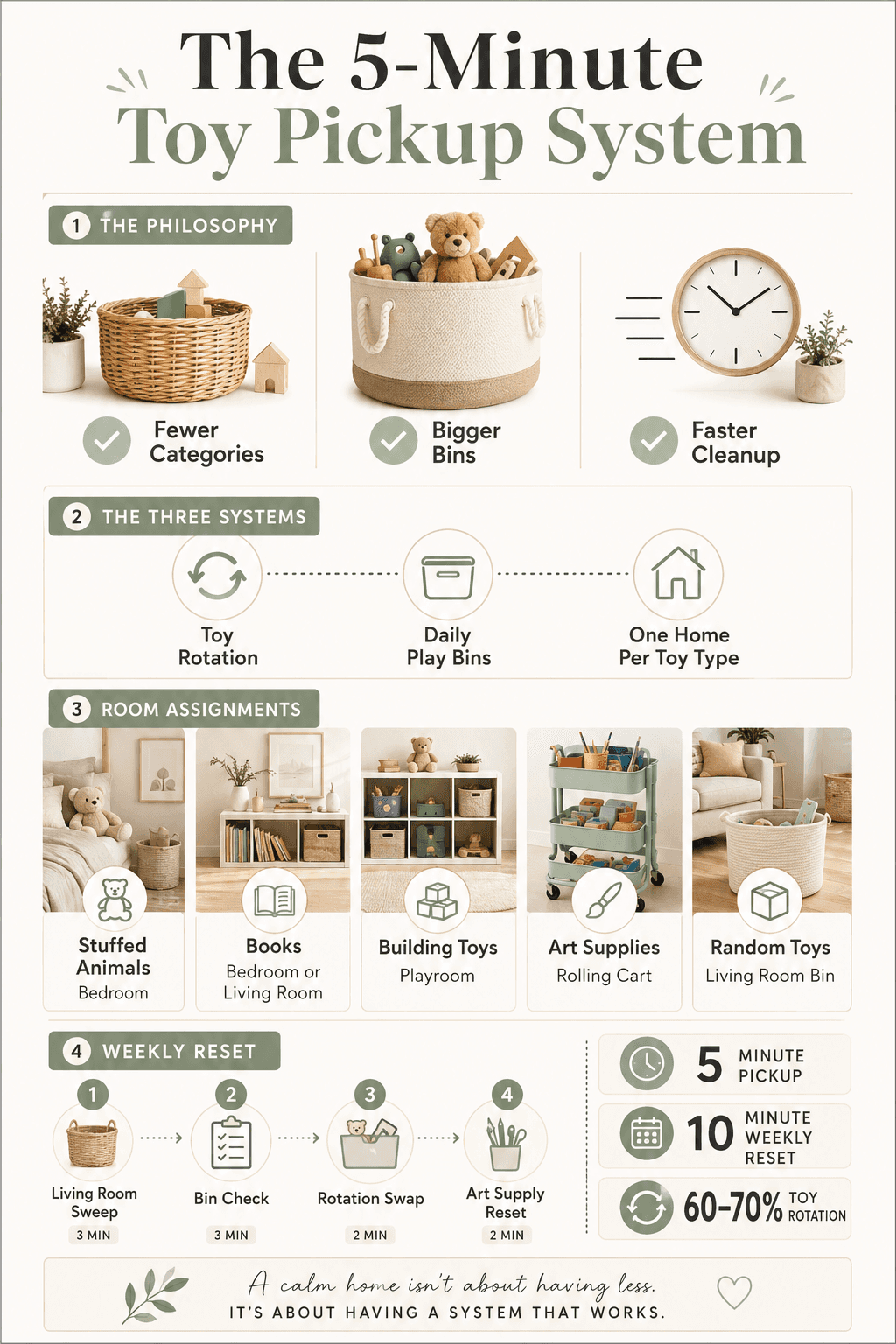
Heres a script. Set a timer. Put on a podcast. Do this after the kids are in bed.
Minutes 1-3: Living room sweep.
Open the ottoman or basket. Anything that doesn't belong in the living room bin, walk it to the right room. Close the lid.
Minutes 3-6: Playroom / bedroom check.
Pull each bin out. Do a quick scan. Anything broken goes in the trash (don't deliberate, just toss). Anything that hasn't been touched in two weeks goes into the rotation closet bin. Push bins back in.
Minutes 6-8: Rotation swap (every other week).
If its a swap week, pull the current rotation bin and replace it with the next one. Put the outgoing bin on the closet shelf. If its not swap week, skip this.
Minutes 8-10: Art supply restock.
Throw away dried-out markers (theres always at least three). Restock paper. Put lids back on Play-Doh. Move the cart back to its spot.
Done. Ten minutes. The week starts with a system thats ready.
This is exactly what I help plan for clients. Want me to design your home like this? Try our 3 Room Bundle
The Stuff That Holds It All Together
A few more links for the pieces I keep coming back to:
A simple toy bin label set if you want labels. Keep them broad. "Build" not "Magna-Tiles 48 piece set."
Closet shelf dividers to keep rotation bins from becoming a closet avalanche
A basket for books in the living room if you go that route instead of ledges
The 66-quart bin I use for toy rotation. Clear so you can see whats inside without opening it.
Where This All Lands
I wont pretend this system means you'll never step on a Lego at 2 AM. You will. Thats a universal constant.
But the difference between "toys everywhere with no plan" and "toys everywhere with a five-minute path back to order" is the difference between dreading that text from your friends and actually being kind of fine with it.
Fewer categories. Bigger bins. One home per toy type. A ten-minute reset once a week.
Thats the whole thing.
If you want help figuring out what this looks like in your actual rooms, with your actual furniture and your actual chaos, thats what the Style Discovery is for. I'll map it out for you.
Now go put the dry shampoo in. You've got three minutes.
If you are looking for more guidance for whole home planning check out:
Laundry Room Organization Ideas
Toy Storage That Actually Works: A Room-by-Room System for Fast Cleanups
*Contains affiliate links
Here's the scenario- Your friends are coming over for dinner, and you have ADHD (like me). So naturally you have over committed yourself to prepping an AHMAZING dinner for them and you have not left yourself enough time to make it. On top of that the kids are all over the place tearing up the house, you still need to at the very least put some dry shampoo in your hair aaannnnddd then they text you "be there in 10." Time to prioritize: put the food in the oven (2 min), get the dry shampoo in (3 mins), pick up the toys (5 min).
Ok, so how do we get to a spot where we can make toy pick up happen in 5 min?
So happy you asked. Lets dive in.
The Philosophy: Fewer Categories, Bigger Bins
Here's where most toy organization goes wrong. Someone watches a pantry restock video, buys 30 small matching containers, labels each one with a cute font, and then two days later there are Magna-Tiles in the Play-Doh bin and a half-eaten granola bar in the Lego drawer.
And honestly, that tracks.
Small bins with specific labels require sorting. Sorting requires time. Time requires motivation. And motivation at 6:47 PM on a Tuesday with guests ten minutes out is not something any of us have in reserve.
So we flip it. Fewer categories. Bigger bins. The kind where your kid (or lets be real, you) can just sweep an arm across the floor and dump everything into one spot.
The goal isn't a perfectly organized toy museum. The goal is a room that looks calm in five minutes.
Shop This Room
These are the pieces that make the system work. Not decorative extras. Functional bones.
The big lidded basket for living room toy sweeps
Cubby shelf that kids can actually reach for playroom zones
Fabric cube bins in neutral colors that hide the chaos
Rolling under-bed bins for bedroom toy overflow
A rolling cart for art supplies that moves where you need it
Wall-mounted book ledges to get books off the floor
Storage ottoman that doubles as seating and a toy vault
Canvas bins with handles for the grab-and-toss system
Three Systems That Make It All Work
This isn't about one magic product. Its about three overlapping systems that keep the volume manageable, the daily mess contained, and the cleanup brainless.
1. Toy Rotation
This is the single biggest lever you can pull.
Most kids have way more toys accessible than they actually play with on any given week. The ones they ignore still end up on the floor somehow. Its like they migrate there out of spite.
Heres the move: take about 60-70% of the toys and put them in a lidded bin in a closet, garage, or anywhere out of the main rooms. Every week or two, swap a bin out. The "new" toys feel exciting again. The total volume on any given day stays low.
I keep ours in three rotation bins on the top shelf of the hall closet. Each one is roughly 66 quarts, which always makes me nervous because that still feels like a lot of toys. But when only one is active, the house feels manageable.
The bins in rotation don't need to be organized internally. Just toss stuff in. The only rule: one bin out at a time.
2. Daily-Play Bins
This is the thing thats out right now. The active set.
Each room where kids play gets one bin. One. Not a shelving unit with twelve cubbies. One generous, open-top container where everything currently in rotation lives.
In the living room, thats the big woven basket with a lid. Lid on, guests never know.
In the playroom, that might be two or three fabric cube bins on a low shelf. Still broad categories. "Things with wheels" and "things you build with" is about as specific as it needs to get.
In the bedroom, a rolling under-bed bin that slides out for play and slides back for done.
The daily-play bin is the answer to "where does this go." It always goes in the bin. Every toy has exactly one decision to make: which room's bin do you belong to.
3. One Home Per Toy Type
Ok so this sounds like it contradicts "fewer categories" and I get that. Stay with me.
This isn't about labeling bins "wooden animals 3 inches and under." Its about answering one question per toy type: what room does this live in.
Stuffed animals. Bedroom.
Art supplies. Playroom (or kitchen table if you dont have a playroom, on the rolling cart so it tucks away).
Books. Bedroom on the wall ledges, or living room in one basket.
Building toys. Playroom.
The random stuff that doesn't fit a category. Living room catch-all bin.
When pickup time hits, you don't sort. You just scoop, walk, and dump into the right room's bin. Your kids can learn this too. Even the three-year-old. Especially the two-year-old, who has very strong opinions about where things go anyway.
Room-by-Room Guidance
The Living Room
This is the room guests see first. Its also, annoyingly, where kids most want to play because thats where you are.
The layout move: one piece of storage that doesnt look like kid storage.
A storage ottoman is my favorite here. It sits in front of the sofa, works as a footrest or extra seat, and holds a shocking amount of toys inside. I measured ours once. 36 by 20 inches, 16 inches deep. Thats an entire bin of Duplos and a bag of play food with room to spare.
If you don't want an ottoman, one large lidded basket beside the sofa or next to the TV console does the same job.
Rules for the living room:
One container. Thats it.
Lid required. Out of sight, out of mind, out of judgment.
Whatever doesn't fit gets walked to its home room. If it overflows, its time to rotate.
This is exactly what I do for clients. Want me to design your room like this? Try our Room Systems Plan
The Bedroom
The bedroom should feel calm at bedtime. Which means toy volume here needs to stay low, and what does live here should be easy to put away while half-asleep and negotiating one more story.
Layout moves:
Under-bed rolling bins for stuffed animals and soft toys. Push them under, done.
Wall-mounted book ledges at kid height. Books face out, they can grab and return them without help. This was the single thing that stopped the pile of books on the floor next to the bed situation at our house.
One small basket on a shelf or dresser for whatever "special" thing they want in their room right now. Ours currently holds a rock collection and a toy stethoscope. I dont ask questions.
Avoid putting a full shelving unit of toys in the bedroom if you can. It competes with sleep. If the bedroom doubles as the playroom (which it does in a lot of homes, and thats fine), keep reading.
The Playroom (or the Bedroom That Doubles as One)
This is where the low cubby shelf earns its keep.
Three to four cubbies. Each one holds a fabric bin. Each bin holds one broad category:
Building stuff (blocks, Magna-Tiles, Legos if your kids are old enough)
Pretend play (kitchen food, dolls, action figures, whatever)
Art and making (crayons, paper, stickers, on the rolling cart if you prefer)
Miscellaneous (the bin that catches everything else, and honestly the most used one)
If the bedroom is also the playroom, this shelf goes against the wall opposite the bed if you can manage it. Creating even a little visual separation between the sleep side and the play side helps.
No tiny bins. No sorting by sub-type. If a Magna-Tile ends up in the pretend play bin, it will survive. Your sanity is worth more than a perfectly sorted cube.
The Weekly Reset: 10 Minutes, Sunday Night
Heres a script. Set a timer. Put on a podcast. Do this after the kids are in bed.
Minutes 1-3: Living room sweep.
Open the ottoman or basket. Anything that doesn't belong in the living room bin, walk it to the right room. Close the lid.
Minutes 3-6: Playroom / bedroom check.
Pull each bin out. Do a quick scan. Anything broken goes in the trash (don't deliberate, just toss). Anything that hasn't been touched in two weeks goes into the rotation closet bin. Push bins back in.
Minutes 6-8: Rotation swap (every other week).
If its a swap week, pull the current rotation bin and replace it with the next one. Put the outgoing bin on the closet shelf. If its not swap week, skip this.
Minutes 8-10: Art supply restock.
Throw away dried-out markers (theres always at least three). Restock paper. Put lids back on Play-Doh. Move the cart back to its spot.
Done. Ten minutes. The week starts with a system thats ready.
This is exactly what I help plan for clients. Want me to design your home like this? Try our 3 Room Bundle
The Stuff That Holds It All Together
A few more links for the pieces I keep coming back to:
A simple toy bin label set if you want labels. Keep them broad. "Build" not "Magna-Tiles 48 piece set."
Closet shelf dividers to keep rotation bins from becoming a closet avalanche
A basket for books in the living room if you go that route instead of ledges
The 66-quart bin I use for toy rotation. Clear so you can see whats inside without opening it.
Where This All Lands
I wont pretend this system means you'll never step on a Lego at 2 AM. You will. Thats a universal constant.
But the difference between "toys everywhere with no plan" and "toys everywhere with a five-minute path back to order" is the difference between dreading that text from your friends and actually being kind of fine with it.
Fewer categories. Bigger bins. One home per toy type. A ten-minute reset once a week.
Thats the whole thing.
If you want help figuring out what this looks like in your actual rooms, with your actual furniture and your actual chaos, thats what the Style Discovery is for. I'll map it out for you.
Now go put the dry shampoo in. You've got three minutes.
If you are looking for more guidance for whole home planning check out:
Laundry Room Organization Ideas
Other Blogs
Other Similar Blogs
Your go-to destination for insightful articles, tips, and inspiration on all things landscaping and outdoor living
Other Blogs
Other Similar Blogs
Your go-to destination for insightful articles, tips, and inspiration on all things landscaping and outdoor living
Other Blogs
Other Similar Blogs
Your go-to destination for insightful articles, tips, and inspiration on all things landscaping and outdoor living
Join our newsletter list
Sign up to get the most recent blog articles in your email every week.