Author
Suzanne is an Owner/Designer
Author
Suzanne is an Owner/Designer
Neo Deco is the 2026 way to bring Art Deco energy into your home without it feeling like a period film. Here's how to get the geometric drama, the polished metals, and the moody contrast while keeping things livable.
Neo Deco is the 2026 way to bring Art Deco energy into your home without it feeling like a period film. Here's how to get the geometric drama, the polished metals, and the moody contrast while keeping things livable.
Neo Deco Interiors: How to Get the 2026 Art Deco Revival Look Without Going Full Gatsby
*This blog contains affiliate links.
Hotels, restaurants, movies, art collections. Just some of the places where you can pull inspiration for a room in your own home. Do you love The Great Gatsby? What about Downton Abbey? The question is how we translate that feeling into your home without it reading as literal. We dont want you stepping onto a movie set. We want someone to walk into your living room and feel like the evening just got more interesting. Like the room has a point of view, and it doesn't need to explain itself.
Lets talk about how to get there with Neo Deco.
Shop This Room
Before we get into the layout thinking, here are the pieces that build this look. Every single one is chosen for function and material quality, not just the vibe.
So What Even Is Neo Deco
Art Deco never really went away. It just got quieter for a while. What were seeing now, in 2025 and into 2026, is a version of it that keeps the bones and drops the costume.
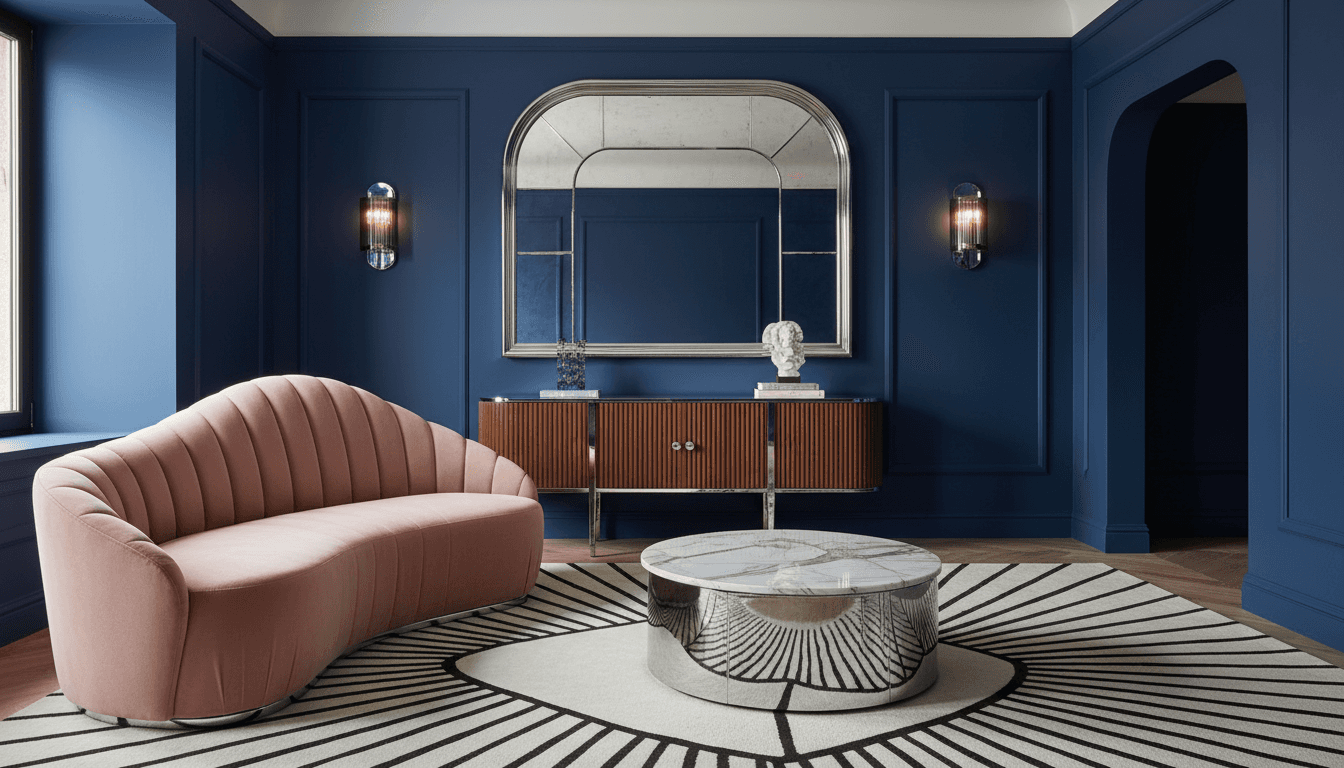
Neo Deco is geometric structure plus polished metals plus graphic contrast. Thats the formula. Its arches, chevrons, scallops, and fan shapes used with intention. Its brass and chrome finished to a shine, not brushed into submission. Its black and white and emerald and blush used in high contrast, not blended into safe neutrals.
The difference between Neo Deco and actual Art Deco is restraint. Original Deco layered pattern on pattern on pattern. Neo Deco picks one motif and commits.
The Materials Palette
This is where the feel comes from. You can get the geometry right and still miss the whole thing if the materials are off.
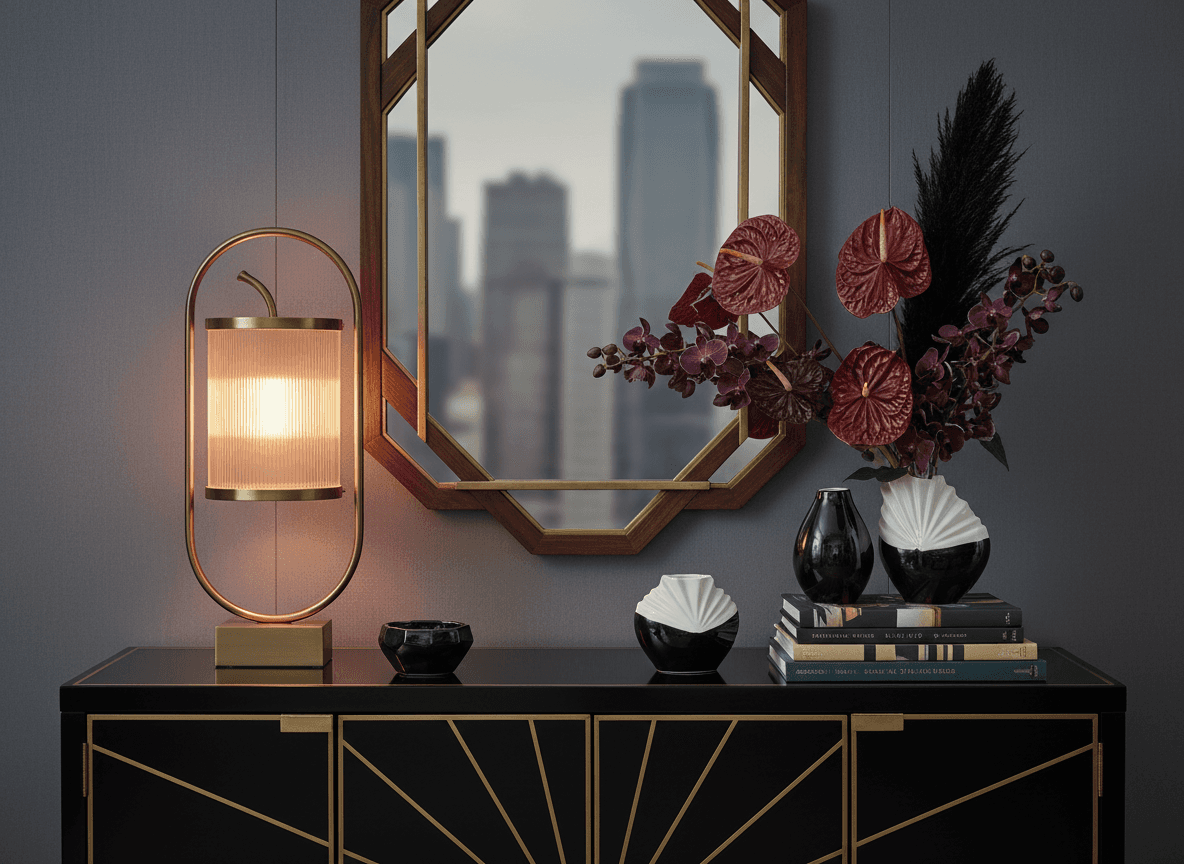
Metals: Chrome or brass, polished. Not matte, not brushed, not antiqued. The shine is the point. Pick one metal and stay with it through the room.
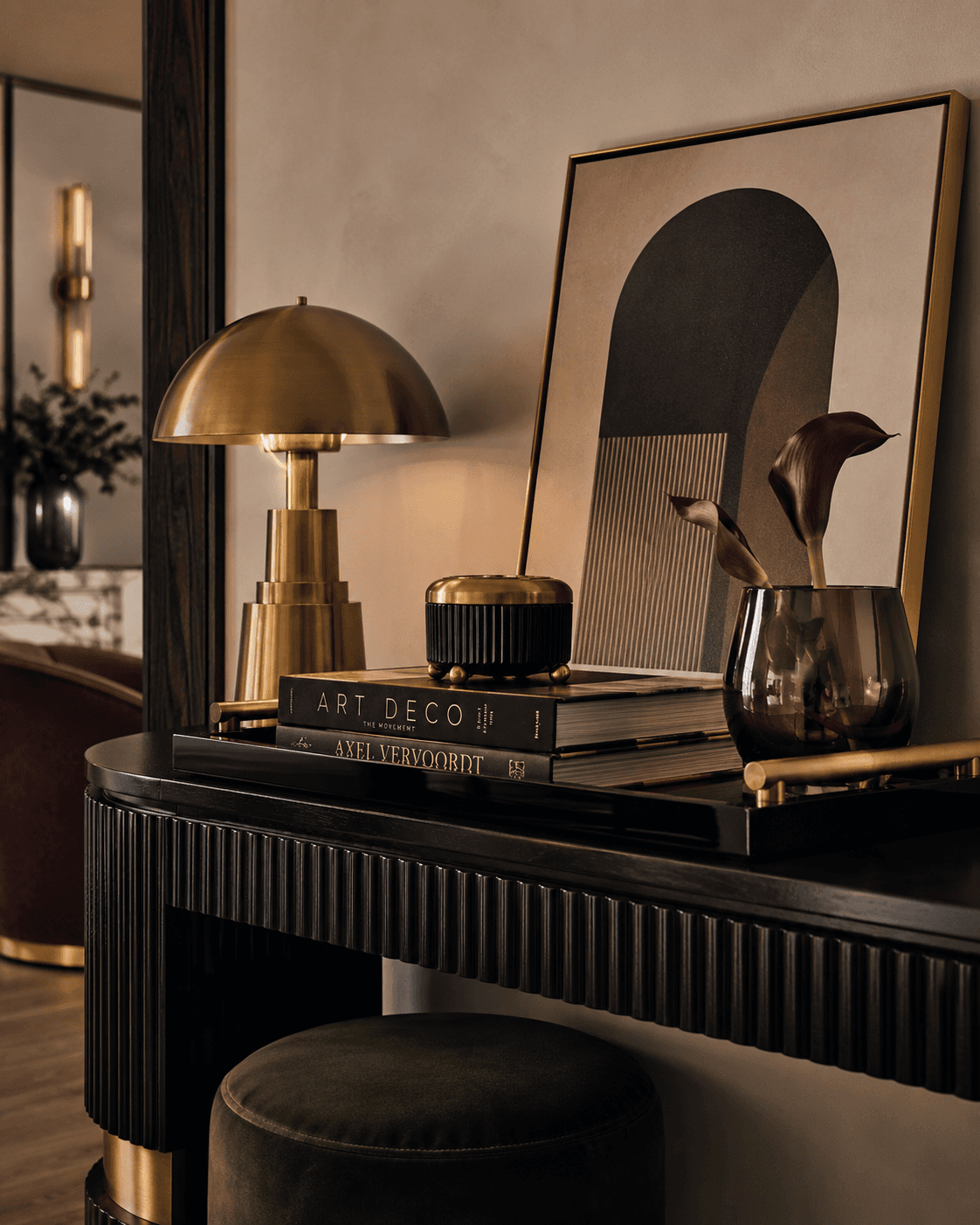
Lacquer: High-gloss surfaces on furniture, trays, boxes. A black lacquered decorative tray on a coffee table does more work than you think.
Marble and stone looks: Real marble is great. A marble-look laminate or porcelain is also great. The graphic veining is what gives you the Deco energy, not the price tag.
Fluting: Vertical channels on furniture, wall panels, cabinet fronts. A fluted nightstand or accent cabinet is the single easiest way to bring Neo Deco into a room without redecorating.
Velvet: Deep, saturated velvet. On a sofa, on dining chairs, on a velvet throw pillow in emerald or navy. The texture absorbs light and gives everything a weighted, grounded feel.
The Virmae Rule for Neo Deco
Heres the layout principle that keeps everything from going sideways.
Pick one hero motif. Repeat it three times. Keep everything else quiet.
Thats it. Thats the whole rule.
If your motif is the arch, maybe thats an arched wall mirror, an arched bookcase, and an arched doorway or cabinet detail. Three times. Then everything else in the room stays clean and geometric but not competing.
If your motif is the chevron, maybe its a chevron rug, a chevron tile backsplash, and a chevron throw pillow. Three times. Done.
If your motif is the scallop, maybe its a scallop-edged mirror, scallop-back dining chairs, and a scallop detail on a pendant light. Three repetitions. No more.
The reason this works is that Deco is inherently busy. It was designed for ballrooms and ocean liners and 40-foot ceilings. Your living room is probably 14 by 18 with an 8-foot ceiling and a vent in a weird spot. You need the motif to register as intentional, not overwhelming.
Room One: The Living Room
The living room is where most folks want this look, and its also where its easiest to overdo it.
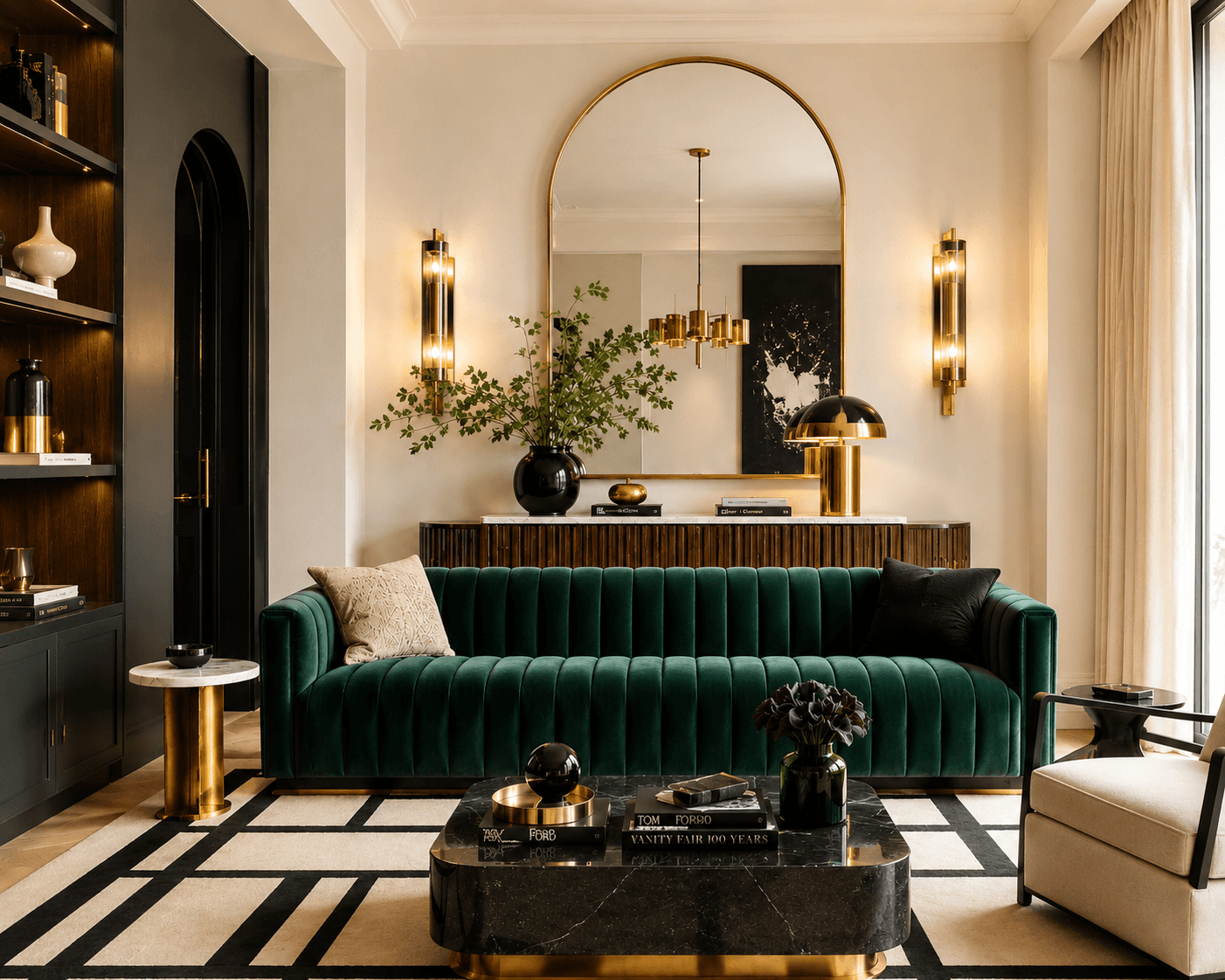
Start with the sofa. A channel-tufted velvet sofa is the anchor. Channel tufting is vertical lines stitched into the upholstery. Its a subtle Deco reference that doesn't scream theme. Place it facing the rooms main focal wall, not floating aimlessly.
Behind or beside the sofa, your hero mirror. One. Not a gallery wall of mirrors. One large arched mirror in brass or gold, leaned or hung. It reflects light and opens the room without adding clutter.
Coffee table: something with a stone or marble top and a metal base. Clean lines. The table does the work of grounding the seating area while the metals tie to your mirror frame and any lighting hardware.
Rug: this is where your second motif repetition can land if you chose a geometric pattern. A black and cream fan or chevron rug under the coffee table, pulled to the front legs of the sofa. The rug defines the conversation area and gives the floor some graphic weight.
Lighting: warm. Always warm. A smoked glass pendant or a pair of brass sconces. Nothing overhead and fluorescent. Neo Deco thrives on moody, layered light. Which always makes me nervous when I see the "bright and airy" crowd try to attempt this style. You need shadow to make the geometry pop.
Room Two: The Powder Bath
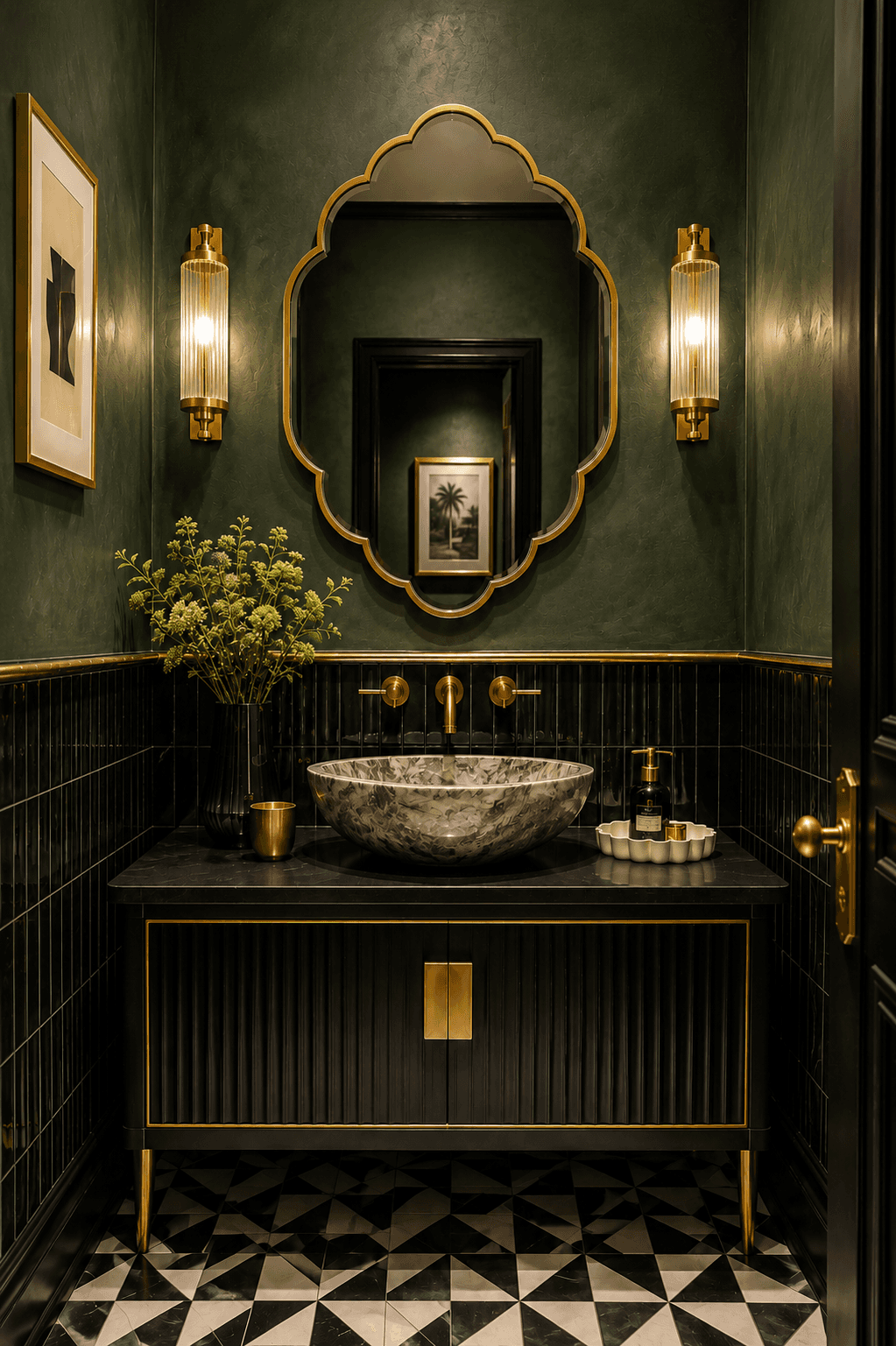
Powder baths are the best room in the house for Neo Deco. I really believe this. Its a small room, usually 25 to 35 square feet, and guests are in there for two minutes. You can go bolder than anywhere else.
The hero motif here is usually the mirror. A scallop-edged or arched vanity mirror sets the tone the second someone walks in. Pair it with brass or gold fixtures. Faucet, towel ring, light fixture, all in the same polished metal.
For the floor, a black and white geometric peel and stick tile or a painted checkerboard. The floor is your second motif hit if youre going graphic. Keep the walls simple. A deep, saturated paint color like emerald, navy, or even black. Let the walls be the backdrop, not the star.
A stone-look vessel sink on a simple vanity adds material texture without adding visual noise.
Third motif repetition: maybe its a small scallop-edged tray holding a candle and a hand soap. Or a scallop-shaped soap dish. Something tiny. It completes the pattern without overwhelming a room that is, lets be honest, the size of a closet.
Room Three: The Dining Nook or Home Bar
This is the room that gets overlooked, and honestly, thats where the opportunity is.
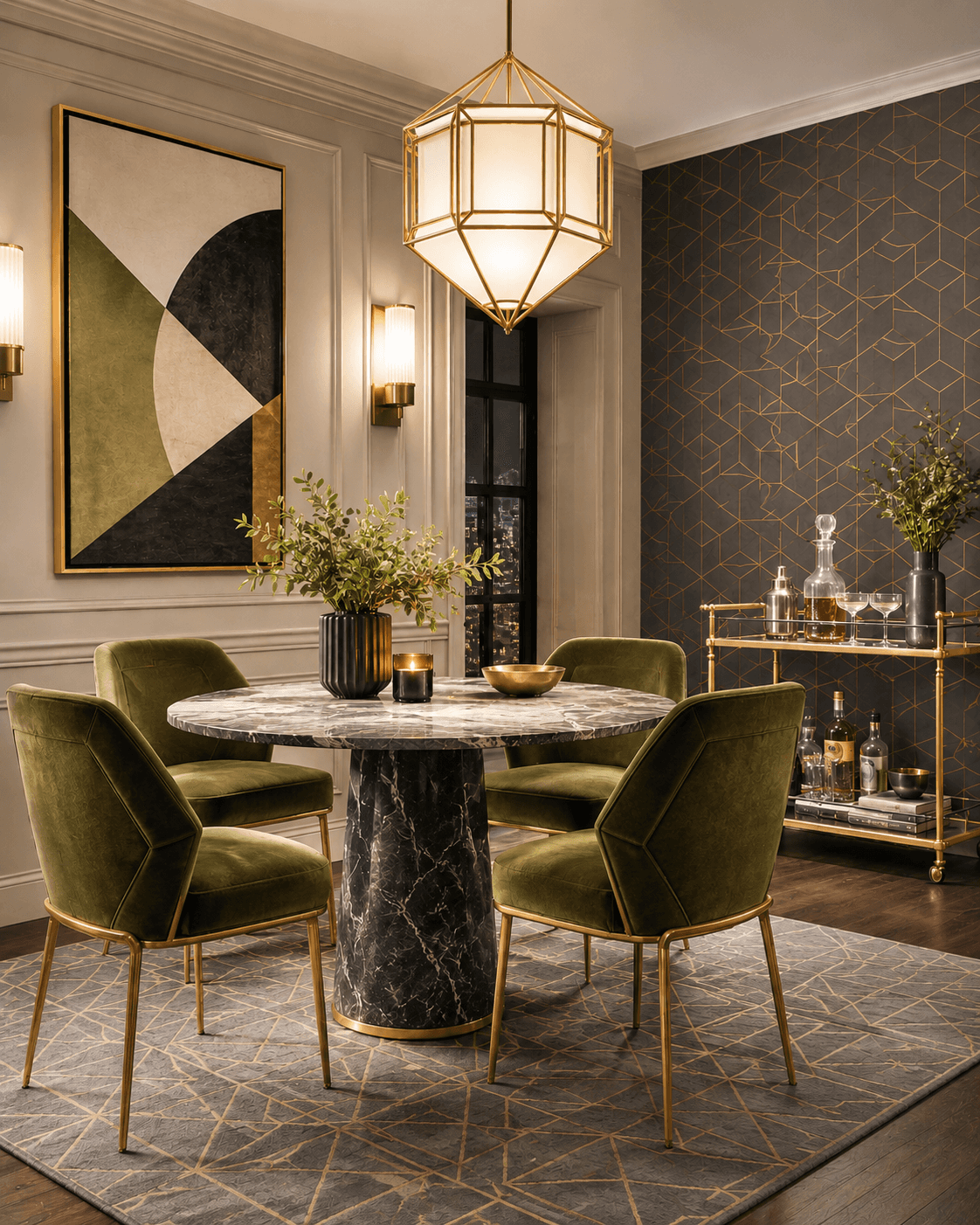
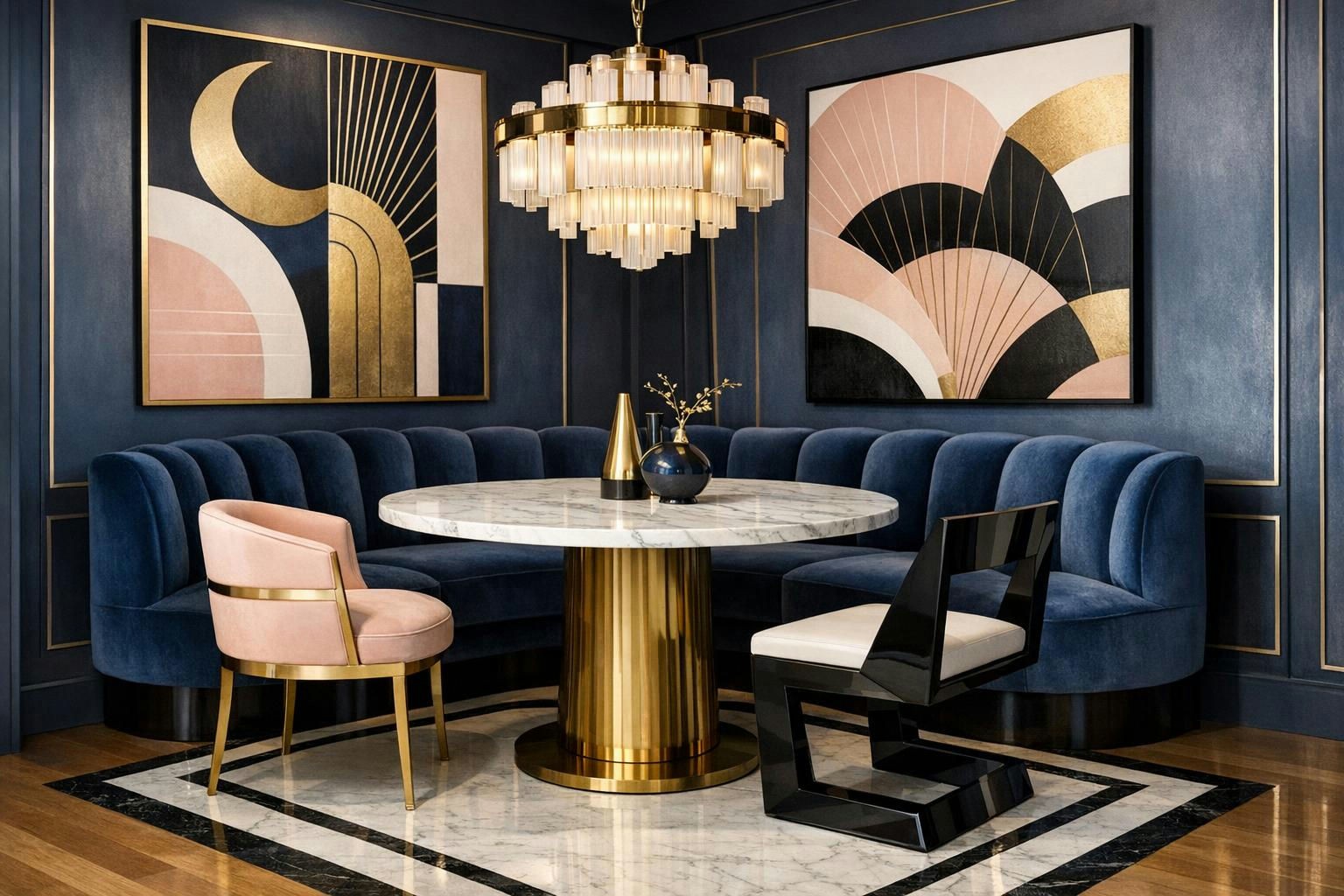
A dining nook, even a small one carved out of a kitchen corner, can feel like something special with the right pieces. A round marble-top dining table is the anchor. Round tables are inherently more Deco than rectangular ones. Something about the geometry and the formality of the shape.
Pair it with two or four velvet dining chairs with brass or gold legs. The velvet picks up the material palette. The metal legs tie to whatever hardware or lighting you're running.
Overhead, a single geometric pendant light. This is your hero motif if you're using a geometric shape in the fixture. It anchors the table visually and gives the nook a sense of being its own room, even if theres no wall separating it from the kitchen.
And then the bar cart. A brass and glass bar cart against the nearest wall, styled with a few bottles, some coupe glasses, and maybe a brass jigger and bar tool set. The bar cart is functional. It holds things you actually use. And it looks like it belongs in this room.
Not sure which direction fits your home best? Start with our Style Discovery and well help you figure it out.
Common Mistakes (and How to Avoid Them)
Ive seen all of these, some of them in very expensive homes, which always makes me nervous to bring up. But here we are.
Too many patterns. This is the number one killer. Chevron rug plus fan-patterned wallpaper plus scallop-backed chairs plus geometric tile. Thats four motifs fighting each other. Pick one. Repeat it three times. Let the rest breathe.
Harsh lighting. Art Deco in movies is always shot with warm, directional light. Then someone tries to recreate it in their dining room with a 5000K LED overhead and wonders why it feels like a dentists office. Use warm bulbs, 2700K to 3000K. Layer your lighting. Table lamps, sconces, pendants on dimmers. The geometry needs shadow to work.
Cheap mirror overload. One good mirror is Neo Deco. Seven small mirrors from the clearance bin arranged in a sunburst pattern is something else entirely. And I say this with love.
All gold everything. Brass and gold are central to this look. But if every single surface, fixture, frame, and handle is gold, it stops reading as intentional and starts reading as a theme party. Mix in matte black, natural wood, or stone to break it up.
Forgetting the layout. This one is the Virmae soapbox moment. You can buy every right piece and still end up with a room that doesn't work if the furniture placement is wrong. The sofa facing a dead wall. The dining table too close to the hallway. The bar cart blocking a walkway. Layout is the infrastructure. Everything else is the finish work.
Where to Start
If you've been saving Deco-inspired rooms on Pinterest for six months and haven't pulled the trigger on anything, heres what I would do.
Pick your hero motif. Arch, chevron, or scallop. Don't agonize. Just pick the one you keep noticing.
Buy one anchor piece that carries that motif. A mirror, a rug, a piece of furniture. Something you can build around.
Then build the room outward from there. Add the metals, the velvet, the stone, one at a time. The layering is what makes Neo Deco feel rich and modern instead of themed and forced.
And if you want someone to just do the whole thing for you, lay out the room, pick the pieces, tell you where every single item goes and why, thats what were here for.
The thing about Neo Deco is that its not really about decoration at all. Its about structure. Geometry. Intention. The decoration is just what makes the structure visible. And I think thats why it keeps coming back, decade after decade. The bones are always good.
Neo Deco Interiors: How to Get the 2026 Art Deco Revival Look Without Going Full Gatsby
*This blog contains affiliate links.
Hotels, restaurants, movies, art collections. Just some of the places where you can pull inspiration for a room in your own home. Do you love The Great Gatsby? What about Downton Abbey? The question is how we translate that feeling into your home without it reading as literal. We dont want you stepping onto a movie set. We want someone to walk into your living room and feel like the evening just got more interesting. Like the room has a point of view, and it doesn't need to explain itself.
Lets talk about how to get there with Neo Deco.
Shop This Room
Before we get into the layout thinking, here are the pieces that build this look. Every single one is chosen for function and material quality, not just the vibe.
So What Even Is Neo Deco
Art Deco never really went away. It just got quieter for a while. What were seeing now, in 2025 and into 2026, is a version of it that keeps the bones and drops the costume.
Neo Deco is geometric structure plus polished metals plus graphic contrast. Thats the formula. Its arches, chevrons, scallops, and fan shapes used with intention. Its brass and chrome finished to a shine, not brushed into submission. Its black and white and emerald and blush used in high contrast, not blended into safe neutrals.
The difference between Neo Deco and actual Art Deco is restraint. Original Deco layered pattern on pattern on pattern. Neo Deco picks one motif and commits.
The Materials Palette
This is where the feel comes from. You can get the geometry right and still miss the whole thing if the materials are off.
Metals: Chrome or brass, polished. Not matte, not brushed, not antiqued. The shine is the point. Pick one metal and stay with it through the room.
Lacquer: High-gloss surfaces on furniture, trays, boxes. A black lacquered decorative tray on a coffee table does more work than you think.
Marble and stone looks: Real marble is great. A marble-look laminate or porcelain is also great. The graphic veining is what gives you the Deco energy, not the price tag.
Fluting: Vertical channels on furniture, wall panels, cabinet fronts. A fluted nightstand or accent cabinet is the single easiest way to bring Neo Deco into a room without redecorating.
Velvet: Deep, saturated velvet. On a sofa, on dining chairs, on a velvet throw pillow in emerald or navy. The texture absorbs light and gives everything a weighted, grounded feel.
The Virmae Rule for Neo Deco
Heres the layout principle that keeps everything from going sideways.
Pick one hero motif. Repeat it three times. Keep everything else quiet.
Thats it. Thats the whole rule.
If your motif is the arch, maybe thats an arched wall mirror, an arched bookcase, and an arched doorway or cabinet detail. Three times. Then everything else in the room stays clean and geometric but not competing.
If your motif is the chevron, maybe its a chevron rug, a chevron tile backsplash, and a chevron throw pillow. Three times. Done.
If your motif is the scallop, maybe its a scallop-edged mirror, scallop-back dining chairs, and a scallop detail on a pendant light. Three repetitions. No more.
The reason this works is that Deco is inherently busy. It was designed for ballrooms and ocean liners and 40-foot ceilings. Your living room is probably 14 by 18 with an 8-foot ceiling and a vent in a weird spot. You need the motif to register as intentional, not overwhelming.
Room One: The Living Room
The living room is where most folks want this look, and its also where its easiest to overdo it.
Start with the sofa. A channel-tufted velvet sofa is the anchor. Channel tufting is vertical lines stitched into the upholstery. Its a subtle Deco reference that doesn't scream theme. Place it facing the rooms main focal wall, not floating aimlessly.
Behind or beside the sofa, your hero mirror. One. Not a gallery wall of mirrors. One large arched mirror in brass or gold, leaned or hung. It reflects light and opens the room without adding clutter.
Coffee table: something with a stone or marble top and a metal base. Clean lines. The table does the work of grounding the seating area while the metals tie to your mirror frame and any lighting hardware.
Rug: this is where your second motif repetition can land if you chose a geometric pattern. A black and cream fan or chevron rug under the coffee table, pulled to the front legs of the sofa. The rug defines the conversation area and gives the floor some graphic weight.
Lighting: warm. Always warm. A smoked glass pendant or a pair of brass sconces. Nothing overhead and fluorescent. Neo Deco thrives on moody, layered light. Which always makes me nervous when I see the "bright and airy" crowd try to attempt this style. You need shadow to make the geometry pop.
Room Two: The Powder Bath
Powder baths are the best room in the house for Neo Deco. I really believe this. Its a small room, usually 25 to 35 square feet, and guests are in there for two minutes. You can go bolder than anywhere else.
The hero motif here is usually the mirror. A scallop-edged or arched vanity mirror sets the tone the second someone walks in. Pair it with brass or gold fixtures. Faucet, towel ring, light fixture, all in the same polished metal.
For the floor, a black and white geometric peel and stick tile or a painted checkerboard. The floor is your second motif hit if youre going graphic. Keep the walls simple. A deep, saturated paint color like emerald, navy, or even black. Let the walls be the backdrop, not the star.
A stone-look vessel sink on a simple vanity adds material texture without adding visual noise.
Third motif repetition: maybe its a small scallop-edged tray holding a candle and a hand soap. Or a scallop-shaped soap dish. Something tiny. It completes the pattern without overwhelming a room that is, lets be honest, the size of a closet.
Room Three: The Dining Nook or Home Bar
This is the room that gets overlooked, and honestly, thats where the opportunity is.
A dining nook, even a small one carved out of a kitchen corner, can feel like something special with the right pieces. A round marble-top dining table is the anchor. Round tables are inherently more Deco than rectangular ones. Something about the geometry and the formality of the shape.
Pair it with two or four velvet dining chairs with brass or gold legs. The velvet picks up the material palette. The metal legs tie to whatever hardware or lighting you're running.
Overhead, a single geometric pendant light. This is your hero motif if you're using a geometric shape in the fixture. It anchors the table visually and gives the nook a sense of being its own room, even if theres no wall separating it from the kitchen.
And then the bar cart. A brass and glass bar cart against the nearest wall, styled with a few bottles, some coupe glasses, and maybe a brass jigger and bar tool set. The bar cart is functional. It holds things you actually use. And it looks like it belongs in this room.
Not sure which direction fits your home best? Start with our Style Discovery and well help you figure it out.
Common Mistakes (and How to Avoid Them)
Ive seen all of these, some of them in very expensive homes, which always makes me nervous to bring up. But here we are.
Too many patterns. This is the number one killer. Chevron rug plus fan-patterned wallpaper plus scallop-backed chairs plus geometric tile. Thats four motifs fighting each other. Pick one. Repeat it three times. Let the rest breathe.
Harsh lighting. Art Deco in movies is always shot with warm, directional light. Then someone tries to recreate it in their dining room with a 5000K LED overhead and wonders why it feels like a dentists office. Use warm bulbs, 2700K to 3000K. Layer your lighting. Table lamps, sconces, pendants on dimmers. The geometry needs shadow to work.
Cheap mirror overload. One good mirror is Neo Deco. Seven small mirrors from the clearance bin arranged in a sunburst pattern is something else entirely. And I say this with love.
All gold everything. Brass and gold are central to this look. But if every single surface, fixture, frame, and handle is gold, it stops reading as intentional and starts reading as a theme party. Mix in matte black, natural wood, or stone to break it up.
Forgetting the layout. This one is the Virmae soapbox moment. You can buy every right piece and still end up with a room that doesn't work if the furniture placement is wrong. The sofa facing a dead wall. The dining table too close to the hallway. The bar cart blocking a walkway. Layout is the infrastructure. Everything else is the finish work.
Where to Start
If you've been saving Deco-inspired rooms on Pinterest for six months and haven't pulled the trigger on anything, heres what I would do.
Pick your hero motif. Arch, chevron, or scallop. Don't agonize. Just pick the one you keep noticing.
Buy one anchor piece that carries that motif. A mirror, a rug, a piece of furniture. Something you can build around.
Then build the room outward from there. Add the metals, the velvet, the stone, one at a time. The layering is what makes Neo Deco feel rich and modern instead of themed and forced.
And if you want someone to just do the whole thing for you, lay out the room, pick the pieces, tell you where every single item goes and why, thats what were here for.
The thing about Neo Deco is that its not really about decoration at all. Its about structure. Geometry. Intention. The decoration is just what makes the structure visible. And I think thats why it keeps coming back, decade after decade. The bones are always good.
Other Blogs
Other Similar Blogs
Your go-to destination for insightful articles, tips, and inspiration on all things landscaping and outdoor living
Other Blogs
Other Similar Blogs
Your go-to destination for insightful articles, tips, and inspiration on all things landscaping and outdoor living
Other Blogs
Other Similar Blogs
Your go-to destination for insightful articles, tips, and inspiration on all things landscaping and outdoor living



Join our newsletter list
Sign up to get the most recent blog articles in your email every week.