Author
Suzanne is an Owner/Designer
Author
Suzanne is an Owner/Designer
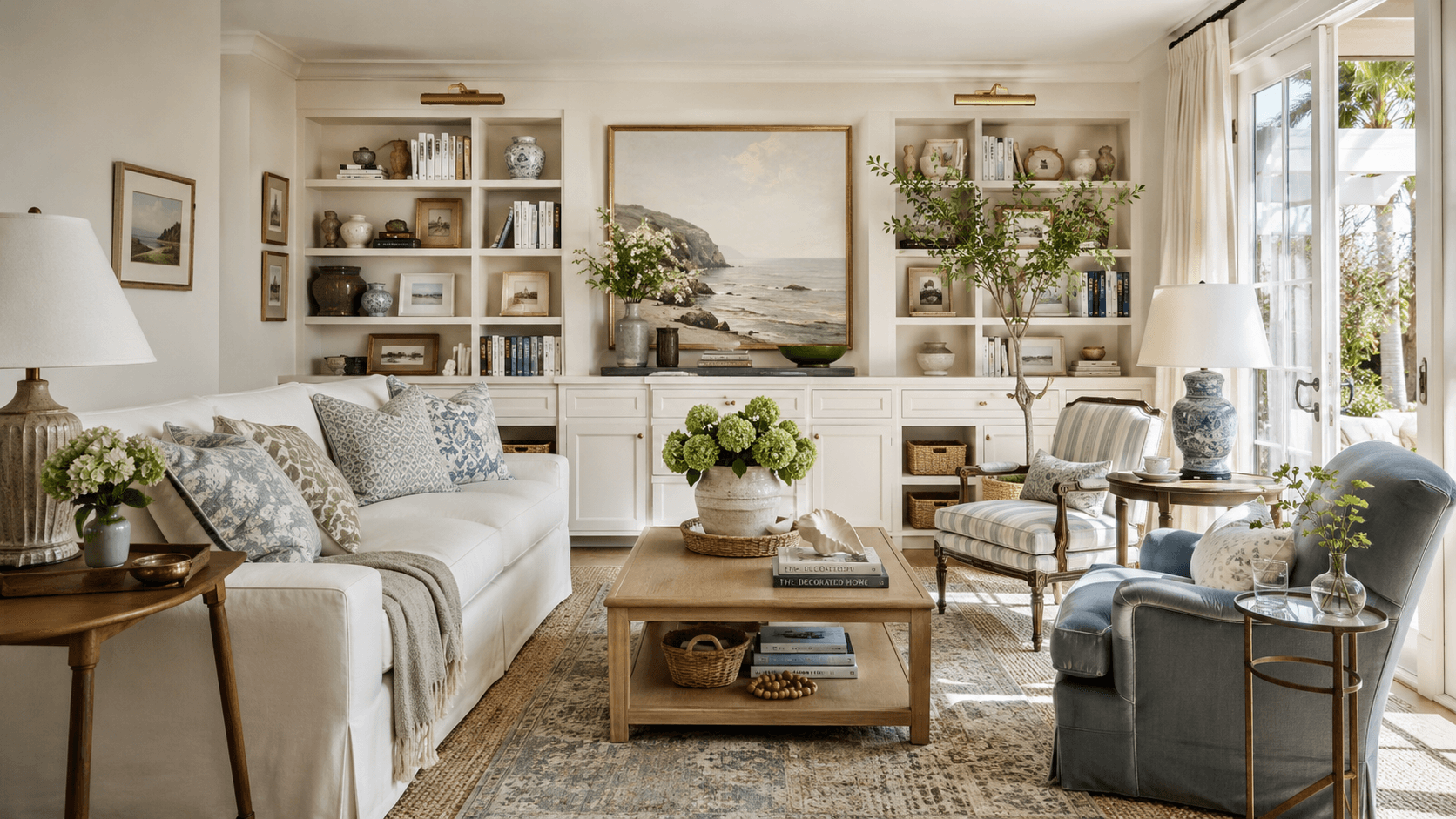
The coastal grandmother living room works best when it feels collected, not cluttered. Here's how to keep the warmth and nostalgia while modernizing the layout, the palette, and the storage.
The coastal grandmother living room works best when it feels collected, not cluttered. Here's how to keep the warmth and nostalgia while modernizing the layout, the palette, and the storage.
Coastal Grandmother Living Room, Modernized: The Virmae Playbook for Warm Nostalgia Without Clutter
*This blog contains affiliate links
I've heard as you age you can either look old, or weird. You can't look young. You've already done that. But while that is true, we all know of an older woman who has aged with grace and used her years to refine her style. Yes, she is clearly old, and yet we all want to be her. She seems effortless. Though she shows her years it does not seem to weigh her down, only make her more beautiful.
That is what we are aiming for with the coastal grandmother living room. A room that has lived and shows her age as beauty and refinement.
Let's learn more about her.
First, What Even Is a Coastal Grandmother Living Room
It's not a beach house.
I need to say that upfront because the internet got hold of this term and suddenly everything was driftwood and navy stripes and rope-wrapped everything. That's not it.
A coastal grandmother living room is really three things layered together: comfort, tradition, and real-life function. It's the room where someone has been reading the same paperbacks for thirty years. Where the throw blanket on the chair arm is actually used, nightly, and has pilled a little because of it. Where there's a lamp that probably came from a parent's house and it still works so it stayed.
The "coastal" part isn't literal beach. It's a lightness. Soft palette. Natural materials. Air moving through.
The "grandmother" part isn't age. It's accumulation with intention. Things that were kept because they earned their place.
When I describe it to clients I usually say: it should feel like the room exhaled ten minutes ago and hasn't needed to inhale yet.
Shop This Room
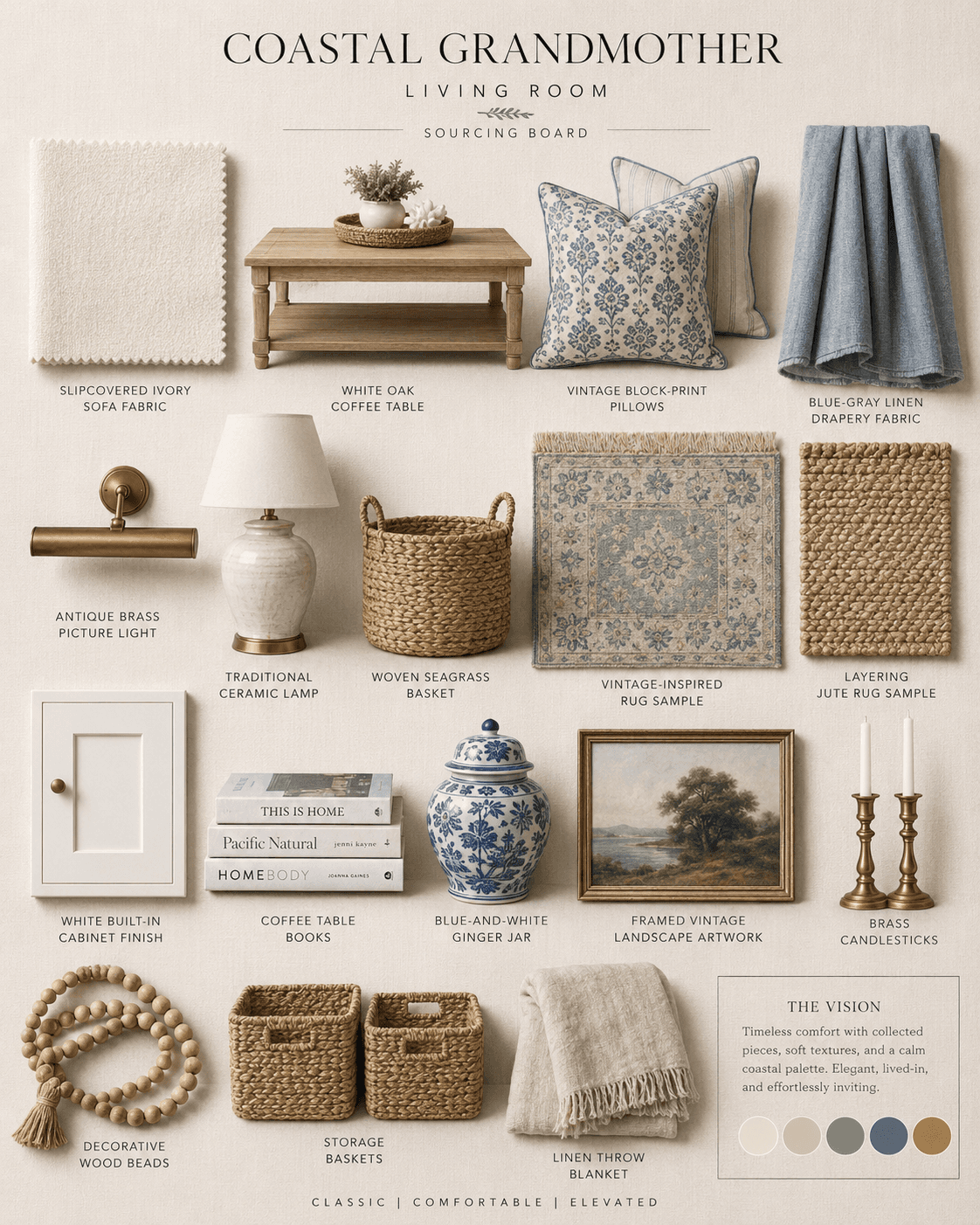
Here are the pieces that build the bones of a modernized coastal grandmother living room. I've chosen things that feel warm and collected without tipping into clutter.
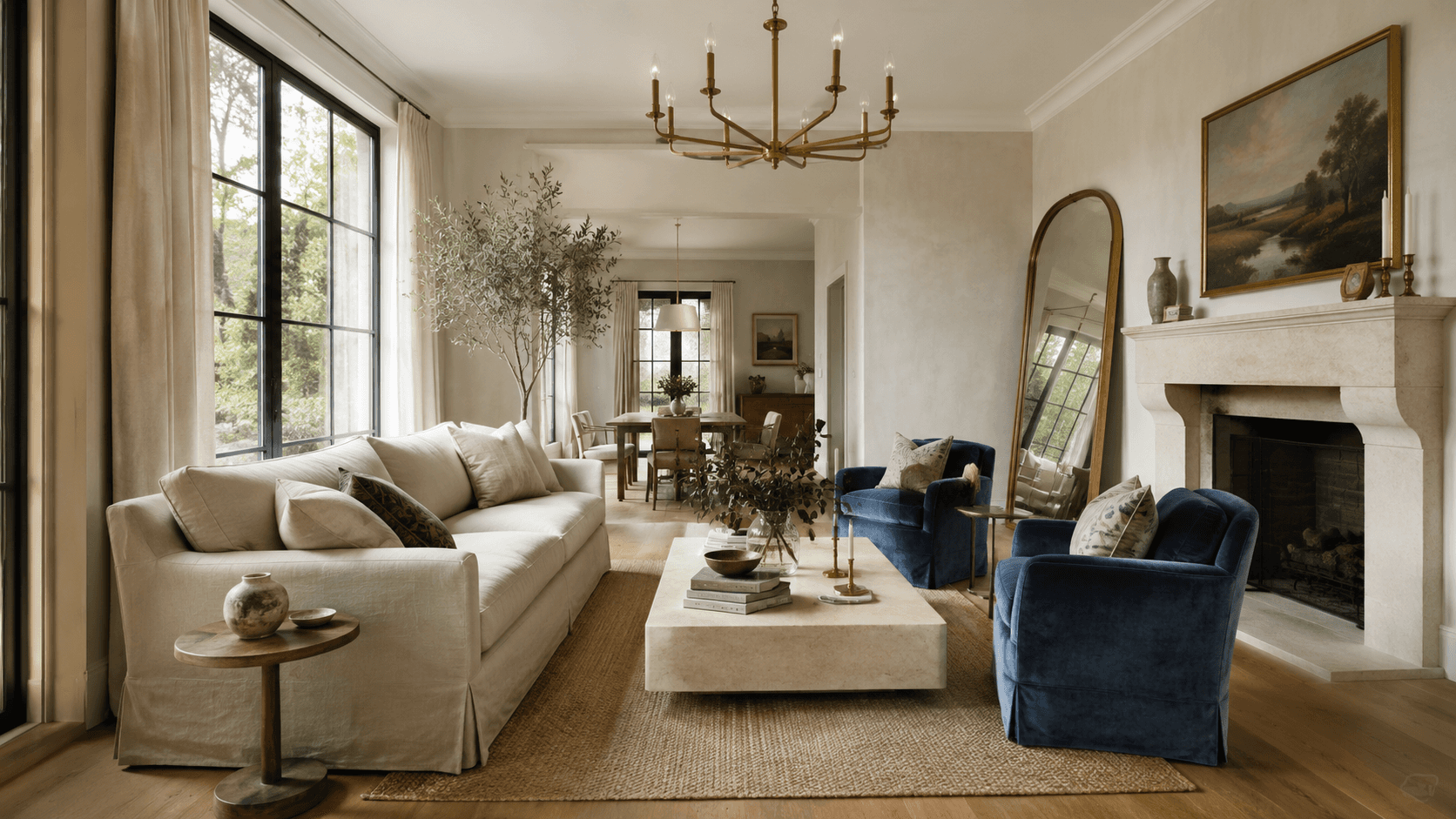
A deep-seat linen sofa in oat, the anchor piece, clean lines, soft fabric
A chunky jute area rug, the one that grounds everything
Block print linen throw pillows, the old-world pattern in a modern shape
A ceramic table lamp with linen shade, warm light, not overhead
Woven lidded storage baskets, for everything you don't want to see
A linen slipcovered accent chair, the kind you actually sit in to read
A simple cotton throw blanket, soft, washed, not decorative
A wooden serving tray for the coffee table, corrals the candle and the book and the remote
The "Modernize It" Framework
Here's where I see most of these rooms go sideways. Someone loves the coastal grandmother idea, so they start collecting. Blue and white pottery. Wicker everything. Vintage prints. Stacks of old books. And before long the room looks like it's being staged for an estate sale rather than being lived in.
The fix isn't to abandon the style. It's to edit it.
Keep the motifs. Block prints, collected pottery, natural textures, vintage textiles. These are what give the room its soul. Don't strip them out.
Edit the palette. The classic coastal grandmother palette skews very blue-and-white, which can read dated fast. Shift toward warm whites, oat, soft sage, washed denim, honey wood tones. Still light. Still airy. Just warmer and a little less expected.
Improve the storage. This is the biggest one. A collected room only looks intentional when there's enough hidden storage to absorb the overflow. If everything is on display, nothing stands out. You need a bookshelf with closed cabinets on the bottom, not just open shelving. You need lidded baskets tucked beside the sofa. You need a console cabinet with doors instead of an open console table.
The stuff is still there. It's just not all visible at once.
How to Mix Old and New: The 70/30 Rule
This is the part that trips everyone up. You want the room to feel collected over time, but you also need it to function well right now. You don't want to live in a museum. You also don't want a room that looks like you ordered everything from the same website on the same Tuesday afternoon.
The rule I use with clients is 70/30.
70% of the room should be your modern anchor pieces. The sofa. The rug. The shelving. The lighting. These should be clean, current, well-made, and honestly a little boring on their own. They're the structure.
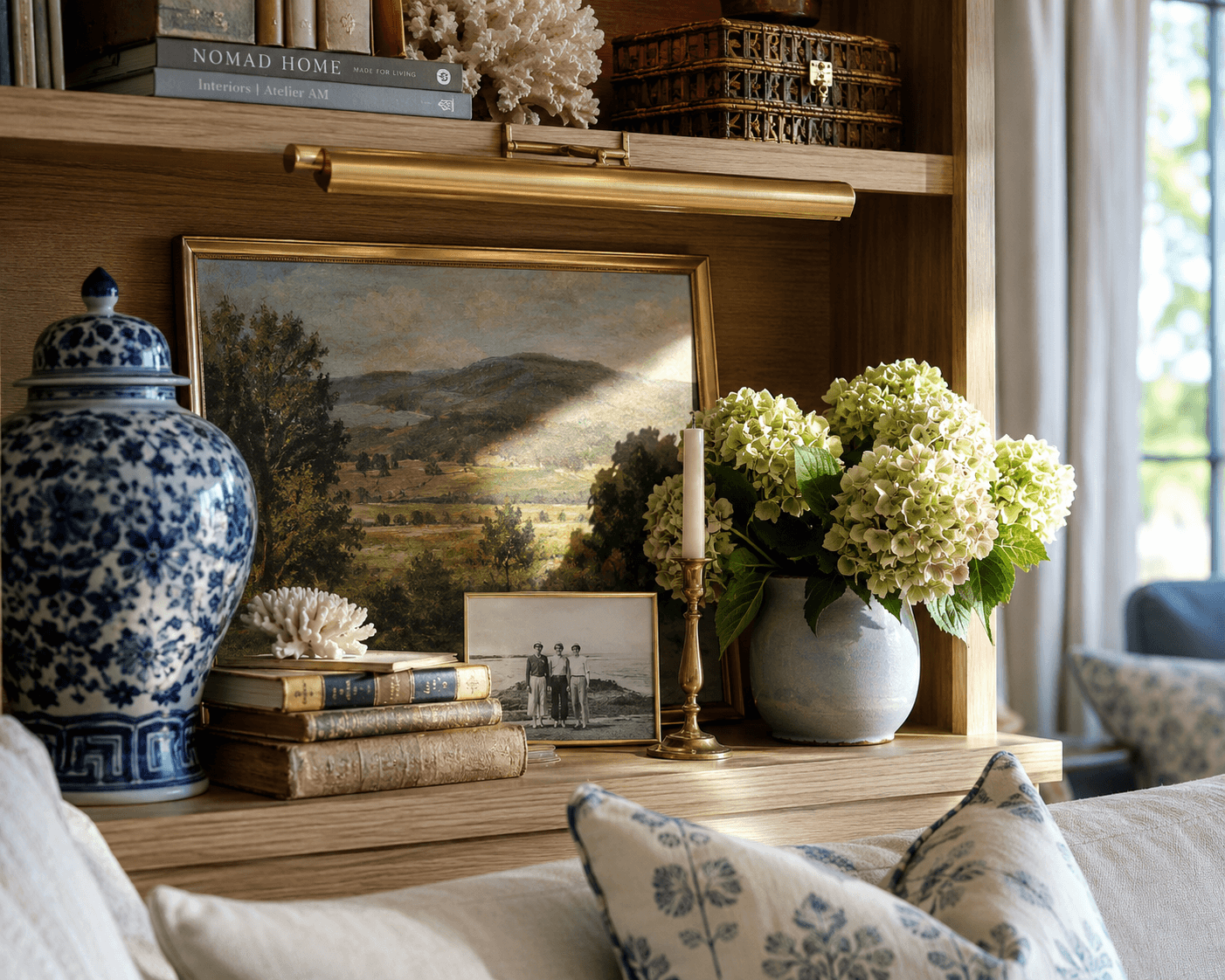
30% is the collected layer. The vintage textile draped over the chair. The pottery you actually found at a flea market. The old books. The inherited lamp. A hand-blocked linen table runner on the console. These are the pieces that give the room its story, its age, its proof of life.
The reason this ratio works is because the modern pieces give the vintage pieces room to breathe. A beautiful old piece of pottery on a cluttered shelf disappears. That same piece on a clean shelf with six inches of air around it becomes the focal point of the room.
And honestly, most of the time when someone says their room "feels cluttered," the problem isn't that they have too much stuff. It's that the 70% anchor pieces aren't doing their job. The bones are too busy.
This is exactly what I do for clients. Want me to design your room like this?
Start with the Style Discovery to tell me about your room, or head straight to schedule a chat if you're ready.

Clutter Boundaries: Display Zones vs. Storage Zones
This is the concept that changed how I approach every collected room.
In a coastal grandmother living room, you are going to have things. That's the whole point. The warmth comes from accumulation. But accumulation without boundaries is just mess.
So I divide every room into two types of zones:
Display zones are the surfaces where collected objects live. The open shelves of the bookcase. The coffee table tray. The mantel or the top of a console. These zones have rules: each one gets a maximum of 3-5 objects, with varying heights, and at least 20% of the surface stays empty. That last part is the one that hurts, which always makes me nervous to say out loud to clients. But the empty surface is what makes the objects on it look intentional.
Storage zones are everywhere else. Inside the cabinet doors. Inside the woven baskets by the sofa. The fabric storage bins on the bottom shelf. The drawer in the side table. These zones absorb the remotes, the chargers, the kid stuff, the magazines from 2019 you'll definitely read someday.
When every surface is both display and storage at the same time, the room feels heavy. When you separate the two, you get that exhale I was talking about earlier.
The Pieces That Pull It Together
A few more things worth mentioning because they tend to be the difference between a room that almost gets there and one that actually does.
Lighting that isn't overhead. Coastal grandmother rooms feel best with layered lamp light. A ceramic table lamp on the side table. A brass floor lamp with a linen shade behind the reading chair. Maybe a small accent lamp on the bookshelf. Overhead fixtures wash everything flat. Lamps create pockets and warmth and shadow. That matters in a room that's supposed to feel like it's been lived in.
A rug that earns its keep. The jute rug is the classic choice and I still reach for it most of the time. It's warm, it's textured, and it hides everything, which is a genuine feature when we're designing for real life. If you want something softer underfoot, a wool-jute blend gives you the same look with a little more give.
Throws that look used. Not folded in a perfect fan on the sofa arm. Draped. Slightly rumpled. A waffle-weave cotton throw is perfect for this because the texture makes it look good even when it's messy.
What She's Not
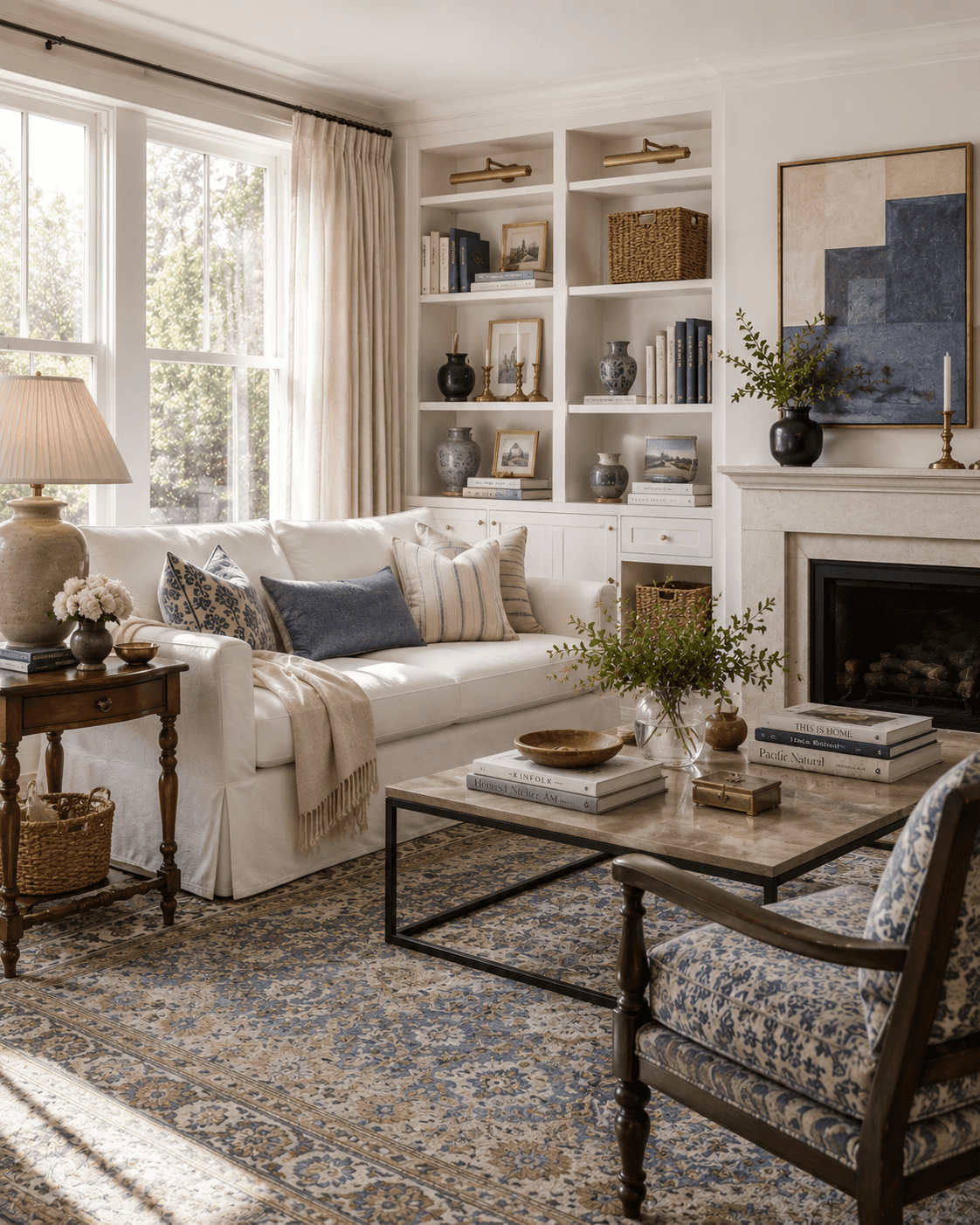
I want to close with what a modernized coastal grandmother room isn't. Because knowing the edges helps.
She's not themed. There are no anchors on the wall. No signs that say "beach" in driftwood letters. The coastal quality comes from lightness and material, not from literal references to the ocean.
She's not precious. Every seat should be a real seat. Every surface should handle a coffee cup without panic. If you're worried about someone using the room, the room isn't working.
She's not finished. And I mean that as a compliment. The best version of this room always looks like it's still becoming. Like one more piece will show up next year from a trip or a relative's house and it'll just fold right in. That unfinished quality is what keeps it from feeling decorated.
Which is, I think, why this style keeps resonating. It's not a look to achieve. It's a way of letting a room accumulate around the way you actually live.
If you want help getting there, that's what I do. Let's make it happen.
I'll be thinking about this one for a while.
Coastal Grandmother Living Room, Modernized: The Virmae Playbook for Warm Nostalgia Without Clutter
*This blog contains affiliate links
I've heard as you age you can either look old, or weird. You can't look young. You've already done that. But while that is true, we all know of an older woman who has aged with grace and used her years to refine her style. Yes, she is clearly old, and yet we all want to be her. She seems effortless. Though she shows her years it does not seem to weigh her down, only make her more beautiful.
That is what we are aiming for with the coastal grandmother living room. A room that has lived and shows her age as beauty and refinement.
Let's learn more about her.
First, What Even Is a Coastal Grandmother Living Room
It's not a beach house.
I need to say that upfront because the internet got hold of this term and suddenly everything was driftwood and navy stripes and rope-wrapped everything. That's not it.
A coastal grandmother living room is really three things layered together: comfort, tradition, and real-life function. It's the room where someone has been reading the same paperbacks for thirty years. Where the throw blanket on the chair arm is actually used, nightly, and has pilled a little because of it. Where there's a lamp that probably came from a parent's house and it still works so it stayed.
The "coastal" part isn't literal beach. It's a lightness. Soft palette. Natural materials. Air moving through.
The "grandmother" part isn't age. It's accumulation with intention. Things that were kept because they earned their place.
When I describe it to clients I usually say: it should feel like the room exhaled ten minutes ago and hasn't needed to inhale yet.
Shop This Room
Here are the pieces that build the bones of a modernized coastal grandmother living room. I've chosen things that feel warm and collected without tipping into clutter.
A deep-seat linen sofa in oat, the anchor piece, clean lines, soft fabric
A chunky jute area rug, the one that grounds everything
Block print linen throw pillows, the old-world pattern in a modern shape
A ceramic table lamp with linen shade, warm light, not overhead
Woven lidded storage baskets, for everything you don't want to see
A linen slipcovered accent chair, the kind you actually sit in to read
A simple cotton throw blanket, soft, washed, not decorative
A wooden serving tray for the coffee table, corrals the candle and the book and the remote
The "Modernize It" Framework
Here's where I see most of these rooms go sideways. Someone loves the coastal grandmother idea, so they start collecting. Blue and white pottery. Wicker everything. Vintage prints. Stacks of old books. And before long the room looks like it's being staged for an estate sale rather than being lived in.
The fix isn't to abandon the style. It's to edit it.
Keep the motifs. Block prints, collected pottery, natural textures, vintage textiles. These are what give the room its soul. Don't strip them out.
Edit the palette. The classic coastal grandmother palette skews very blue-and-white, which can read dated fast. Shift toward warm whites, oat, soft sage, washed denim, honey wood tones. Still light. Still airy. Just warmer and a little less expected.
Improve the storage. This is the biggest one. A collected room only looks intentional when there's enough hidden storage to absorb the overflow. If everything is on display, nothing stands out. You need a bookshelf with closed cabinets on the bottom, not just open shelving. You need lidded baskets tucked beside the sofa. You need a console cabinet with doors instead of an open console table.
The stuff is still there. It's just not all visible at once.
How to Mix Old and New: The 70/30 Rule
This is the part that trips everyone up. You want the room to feel collected over time, but you also need it to function well right now. You don't want to live in a museum. You also don't want a room that looks like you ordered everything from the same website on the same Tuesday afternoon.
The rule I use with clients is 70/30.
70% of the room should be your modern anchor pieces. The sofa. The rug. The shelving. The lighting. These should be clean, current, well-made, and honestly a little boring on their own. They're the structure.
30% is the collected layer. The vintage textile draped over the chair. The pottery you actually found at a flea market. The old books. The inherited lamp. A hand-blocked linen table runner on the console. These are the pieces that give the room its story, its age, its proof of life.
The reason this ratio works is because the modern pieces give the vintage pieces room to breathe. A beautiful old piece of pottery on a cluttered shelf disappears. That same piece on a clean shelf with six inches of air around it becomes the focal point of the room.
And honestly, most of the time when someone says their room "feels cluttered," the problem isn't that they have too much stuff. It's that the 70% anchor pieces aren't doing their job. The bones are too busy.
This is exactly what I do for clients. Want me to design your room like this?
Start with the Style Discovery to tell me about your room, or head straight to schedule a chat if you're ready.
Clutter Boundaries: Display Zones vs. Storage Zones
This is the concept that changed how I approach every collected room.
In a coastal grandmother living room, you are going to have things. That's the whole point. The warmth comes from accumulation. But accumulation without boundaries is just mess.
So I divide every room into two types of zones:
Display zones are the surfaces where collected objects live. The open shelves of the bookcase. The coffee table tray. The mantel or the top of a console. These zones have rules: each one gets a maximum of 3-5 objects, with varying heights, and at least 20% of the surface stays empty. That last part is the one that hurts, which always makes me nervous to say out loud to clients. But the empty surface is what makes the objects on it look intentional.
Storage zones are everywhere else. Inside the cabinet doors. Inside the woven baskets by the sofa. The fabric storage bins on the bottom shelf. The drawer in the side table. These zones absorb the remotes, the chargers, the kid stuff, the magazines from 2019 you'll definitely read someday.
When every surface is both display and storage at the same time, the room feels heavy. When you separate the two, you get that exhale I was talking about earlier.
The Pieces That Pull It Together
A few more things worth mentioning because they tend to be the difference between a room that almost gets there and one that actually does.
Lighting that isn't overhead. Coastal grandmother rooms feel best with layered lamp light. A ceramic table lamp on the side table. A brass floor lamp with a linen shade behind the reading chair. Maybe a small accent lamp on the bookshelf. Overhead fixtures wash everything flat. Lamps create pockets and warmth and shadow. That matters in a room that's supposed to feel like it's been lived in.
A rug that earns its keep. The jute rug is the classic choice and I still reach for it most of the time. It's warm, it's textured, and it hides everything, which is a genuine feature when we're designing for real life. If you want something softer underfoot, a wool-jute blend gives you the same look with a little more give.
Throws that look used. Not folded in a perfect fan on the sofa arm. Draped. Slightly rumpled. A waffle-weave cotton throw is perfect for this because the texture makes it look good even when it's messy.
What She's Not
I want to close with what a modernized coastal grandmother room isn't. Because knowing the edges helps.
She's not themed. There are no anchors on the wall. No signs that say "beach" in driftwood letters. The coastal quality comes from lightness and material, not from literal references to the ocean.
She's not precious. Every seat should be a real seat. Every surface should handle a coffee cup without panic. If you're worried about someone using the room, the room isn't working.
She's not finished. And I mean that as a compliment. The best version of this room always looks like it's still becoming. Like one more piece will show up next year from a trip or a relative's house and it'll just fold right in. That unfinished quality is what keeps it from feeling decorated.
Which is, I think, why this style keeps resonating. It's not a look to achieve. It's a way of letting a room accumulate around the way you actually live.
If you want help getting there, that's what I do. Let's make it happen.
I'll be thinking about this one for a while.
Other Blogs
Other Similar Blogs
Your go-to destination for insightful articles, tips, and inspiration on all things landscaping and outdoor living
Other Blogs
Other Similar Blogs
Your go-to destination for insightful articles, tips, and inspiration on all things landscaping and outdoor living
Other Blogs
Other Similar Blogs
Your go-to destination for insightful articles, tips, and inspiration on all things landscaping and outdoor living
Join our newsletter list
Sign up to get the most recent blog articles in your email every week.